IEU supports members across Tasmania
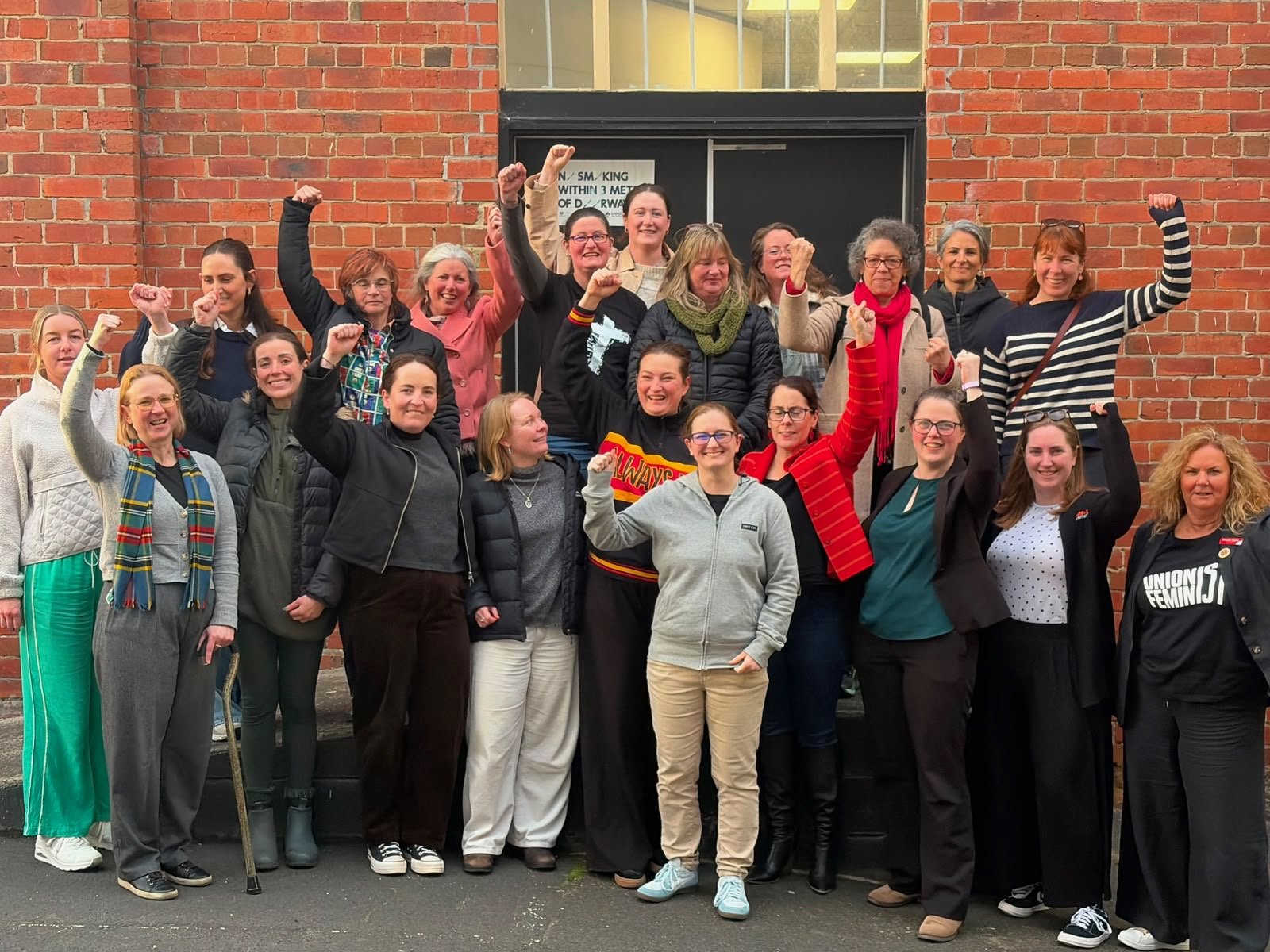
The final week of Term 2 has been a busy one for the IEU in Tasmania, with union staff supporting members in workplaces, bargaining and professional development across the state.
Catholic bargaining update
While formal bargaining has progressed more slowly than anticipated, important groundwork continues behind the scenes.
Following the initial bargaining meeting on 11 June, the Catholic Education Commission Tasmania (CET) has been preparing the documentation required before formal negotiations can begin. As a result, three scheduled bargaining meetings have been postponed.
The work has been more complex than expected, particularly due to legislative changes and the need to determine how employees in new Blend Ed and CET Office roles will be covered by the new Agreement. CET is also now receiving industrial advice from Catholic Employment Relations NSW.
Although delays are frustrating, the IEU has welcomed CET’s willingness to work collaboratively throughout the process. The union has been invited to review the documentation before it is formally submitted, helping identify and resolve issues early rather than risking delays later in bargaining.
The IEU has now received the final documents for review and will provide feedback as quickly as possible.
The next step is for CET to issue the Notice of Employee Representational Rights (NERR) to all employees who will be covered by the Agreement. Under workplace laws, this notice must be issued at least 14 days before formal bargaining can commence.
As a result, the first formal bargaining meeting of Term 3, scheduled for early August, will now include presentation of both the IEU Member Log of Claims and the employer’s Log of Claims. Members will receive a full update immediately after that meeting.
Ongoing bargaining meetings are expected to occur every two weeks.
Members have set their priorities
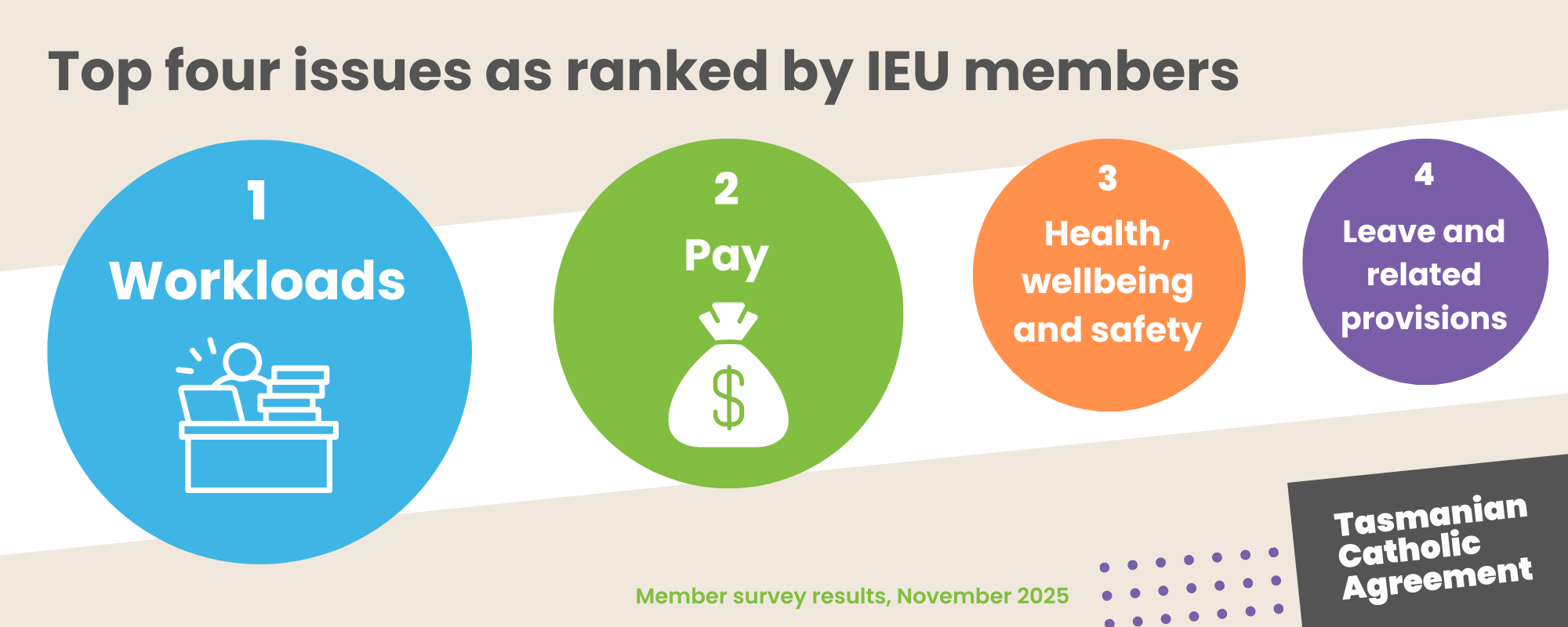
IEU members endorsed their Log of Claims in April, with three clear priorities:
higher salaries
reduced workload
safer workplaces.
The union will continue to use recent Tasmanian government school agreements as an important benchmark.
Those outcomes included:
Support staff: average pay increases of about 11%, extra paid workdays, new career pathways, improved allowances, and stronger leave entitlements.
Teachers, psychologists, education support specialists and school leaders: pay rises averaging 8.75–9.01%, additional leave provisions, limits on after-school meeting hours, and improved workload protections.
The IEU believes Catholic education employees deserve comparable improvements to their state sector colleagues and will continue to pursue fair salaries, manageable workloads, safer workplaces and stronger conditions throughout bargaining.
As negotiations begin, members are encouraged to stay informed, talk with colleagues and continue building union strength. The stronger our membership, the stronger our voice at the bargaining table.
School visits
On Tuesday, union staff visited Catholic schools Star of the Sea George Town and St Patrick’s College Launceston in the north-east, where members expressed strong interest in progress towards a new Agreement for the Catholic education sector.
In the south, senior staff attended a bargaining meeting at Friends, an independent co-educational school in Hobart, where the employer and IEU exchanged logs of claims. The meeting was productive, with both parties seeking clarification on a range of issues. Bargaining will resume after the school holidays, with each side returning to the table to respond to the claims raised.
Wednesday included visits with members at St James’ College Cygnet and Sacred Heart School Geeveston, followed on Thursday by an extended visit with junior and senior staff at St Mary’s College Hobart. On the final day of term, organisers meet members at St Paul’s School Bridgewater and St Brigid’s School New Norfolk.
CST talks
Senior staff also visited all four Christian Schools Tasmania (CST) schools during the week: Northern Christian School and Emmanuel Christian School on Wednesday, followed by Channel Christian School and Calvin Christian School on Thursday. Members received updates on bargaining for the new Enterprise Agreement.
The IEU advocated for CST General Staff to receive the same potential salary increases as teachers, calling on the Board to lift the CPI safety net from 3% to 3.5%. The union argued this was a fair and affordable measure that recognised the essential contribution of General Staff, many of whom are among the lowest-paid workers in CST schools.
The request was rejected by CST. The IEU will continue to monitor the impact of this decision and advocate for equitable salary outcomes for all staff. Members were also encouraged to invite colleagues to join the union, strengthening the collective voice of CST staff.
Women’s Conference
The week concludes with the IEU’s attendance at the Tasmanian Women’s Conference on Friday 10 July. The conference is the culmination of a week of women-focused activities supporting the development of future workplace leaders and activists, featuring the Anna Stewart Memorial Project training program, which the union proudly supports.
It combines practical union education, leadership development and workplace organising activities. Participants typically:
learn about union history, campaigning and industrial advocacy
develop skills in communication, organising, recruitment and member engagement
hear from union leaders and activists about their experiences
visit workplaces and meet union members and delegates
participate in discussions, workshops and networking with other union women
explore strategies for building stronger, safer and fairer workplaces.