
IEU women and equity: International Women’s Day 2026
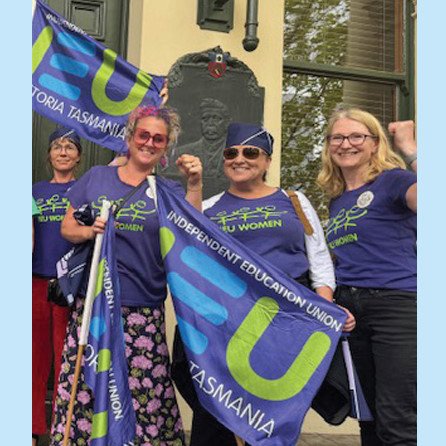
Women make up three-quarters of the education workforce, including more than 50,000 IEU members nationally. International Women’s Day highlights how these members, and the broader union movement, drive change in workplaces, policy, and government.
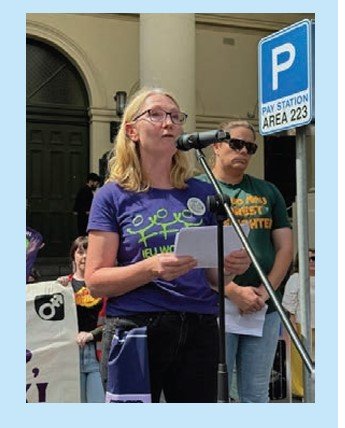
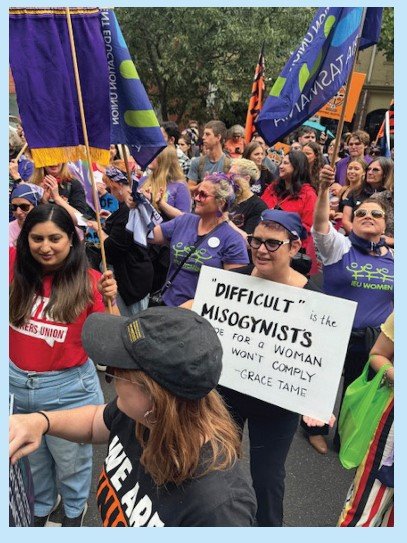
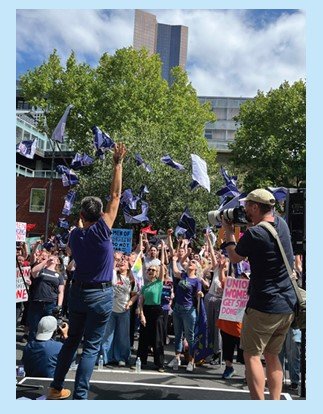
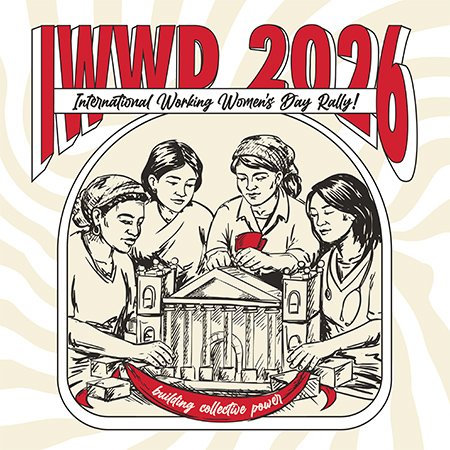
This year’s International Working Women’s Day celebrations in Melbourne focused, for the first time, on a midday rally on the Trades Hall steps, making the union movement’s celebration larger and more visible than in previous years. The first-ever IWWD Statewide Union Training Day ran alongside the lunchtime gathering, equipping union members with skills and knowledge to organise and build power in workplaces and communities.
IEU Rep Gayle Fava from Queen of Peace Primary School, Altona Meadows, addressed the rally. She reflected on the central role women play in education and the union movement, and highlighted the pressures teachers face.
“Education is an overwhelmingly female-dominated profession, although this gender imbalance is often not reflected in the ranks of leadership,” Gayle said.
“Teachers… are not just teachers – we play the role of nurse, psychologist, cleaner, and countless others. For too long, teachers have had to contend with unrealistic expectations of work outside school hours, and with the pressure to solve all of society’s problems within the hours of 9 and 3:30. Too often, employers assume that our empathetic nature means we will simply absorb these pressures and keep going.”
She said this made the IEU’s campaign for a Single Interest Agreement in Victorian Catholic education all the more important.
“When union members organise together, we build the collective strength needed to change things. That is how teachers in Catholic education won pay parity in the past – and it is how we will secure fair agreements in the future.
“International Women’s Day reminds us that progress has always come from women organising together.”
Why International Women’s Day matters to the IEU
International Women’s Day (IWD) originated from union, labour, and social movements of the early twentieth century, when women organised for the vote, safe workplaces, and economic justice.
Current union work in feminised industries focuses on addressing pay gaps, leadership inequality, and workplace pressures.
“Education is an overwhelmingly female-dominated profession, although this gender imbalance is often not reflected in the ranks of leadership,” Gayle said.
The 2026 report card
Narrowing the gender pay gap
Recent improvements in the gender pay gap stem from union-won rights and federal reforms. Men still dominate managerial roles in education, a highly feminised sector.
Reproductive health in the workplace
Unions lead efforts to secure reproductive health leave through collective bargaining and advocate for universal worker rights. Women are disproportionately affected by reproductive health conditions.
Religious discrimination exemptions
The IEU continues to lobby for reform of outdated exemptions that allow faith-based employers to discriminate based on marital or relationship status, pregnancy, or lawful medical or fertility treatments. These practices continue to have a significant impact on staff in religious schools.
Anna Stewart Memorial Project, May 2026
Applications are open for the next Victorian intake of the Anna Stewart Memorial Project (ASMP), now in its 42nd year. This two-week on-the-job training program is for women and non-binary active union members and delegates seeking to build leadership skills and deepen understanding of how unions advance women’s rights at work. Week 1 runs from 4–8 May, and Week 2 from 25–29 May.
For more information: info@ieuvictas.org.au
PD Webinar – Women in Leadership: Pathways to leadership
Thursday 18 June, 6:30–7:30pm
This session for aspiring female leaders features Erin Bonavia reflecting on her pathway to senior leadership in schools. Book here.
Members are also encouraged to monitor the IEU training and events page for upcoming opportunities, including the OHS-HSR refresher course on work-related gendered violence, including sexual harassment.