
Strong union message at workers’ memorial

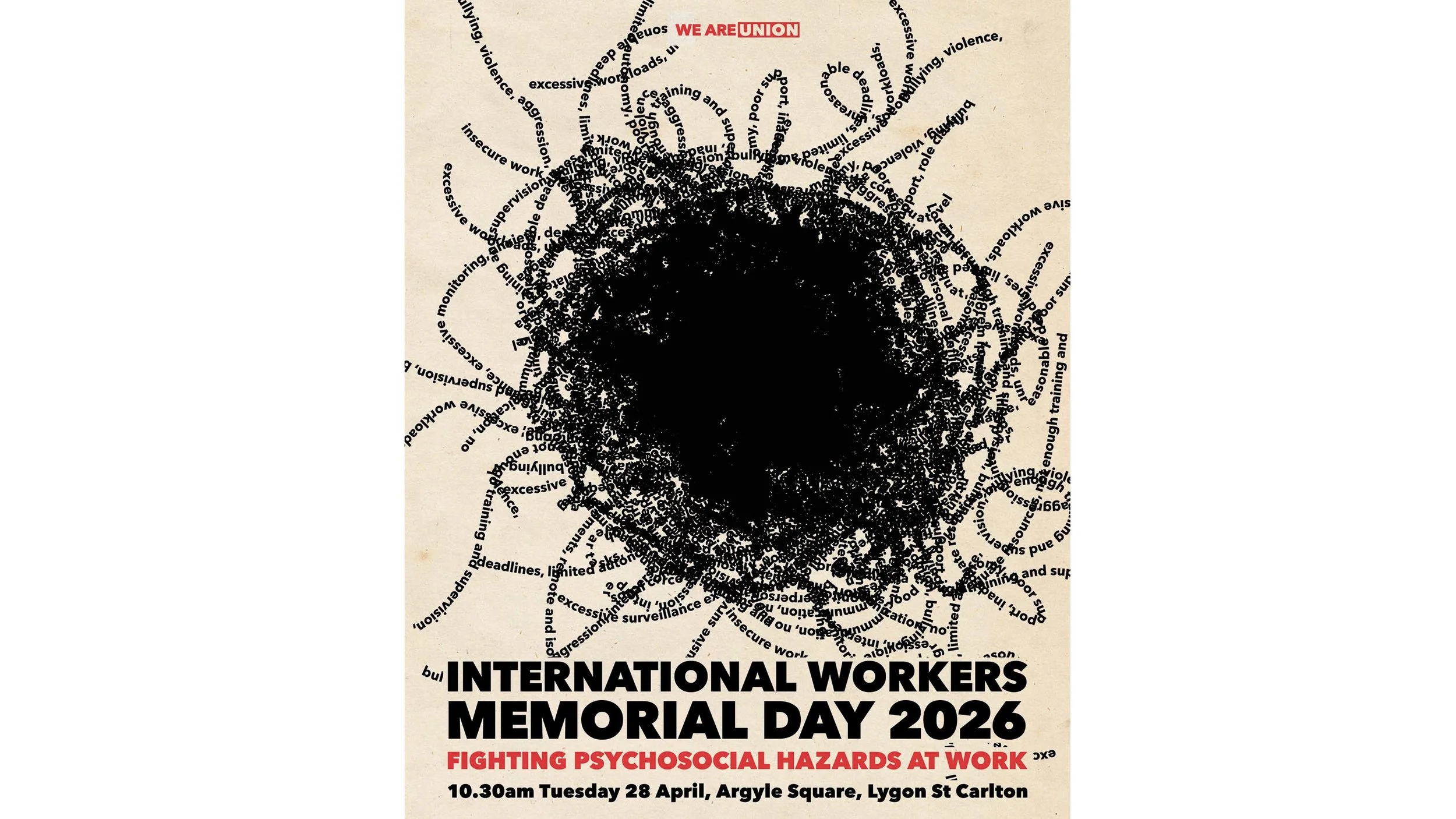
A moving ceremony on the morning of Tuesday 28th April recognised International Worker’s Memorial Day (IWMD) at Argyle Square in Carlton.
Each year family members, unionists, workers and their loved ones gather to remember the lives lost in the workplace and recommit ourselves to fighting for the living.
In 2025-2026, 60 Victorians died because of their work. Sixty empty chairs at the memorial represented their loss, and a pair of work boots was placed on each chair as the name of the deceased worker was read out.
Union members, government representatives, and the families, friends and co-workers of those killed or injured at work, came together to pay tribute to those lost, and to recommit to preventing further workplace deaths and injuries.
IEU and AEU representatives laid wreathes together on behalf of their members.
While few educators lose their lives at work, there is growing recognition of the broader toll of unsafe workplaces in education. This harm is often underreported, as it may emerge off-site or after workers have left the profession due to injury, stress or burnout.
The international theme for this year’s IWMD is ‘Fighting Psychosocial Hazards at Work,’ all too familiar to educators and IEU members.
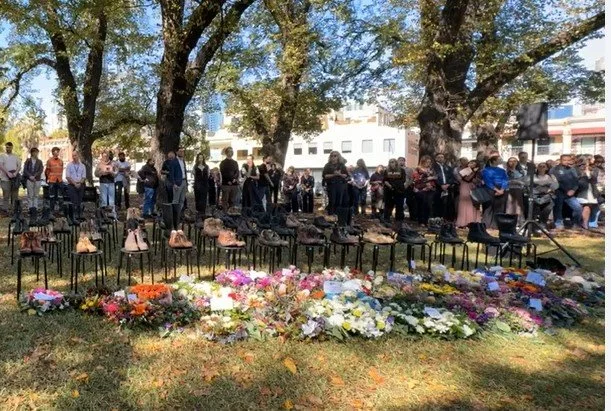
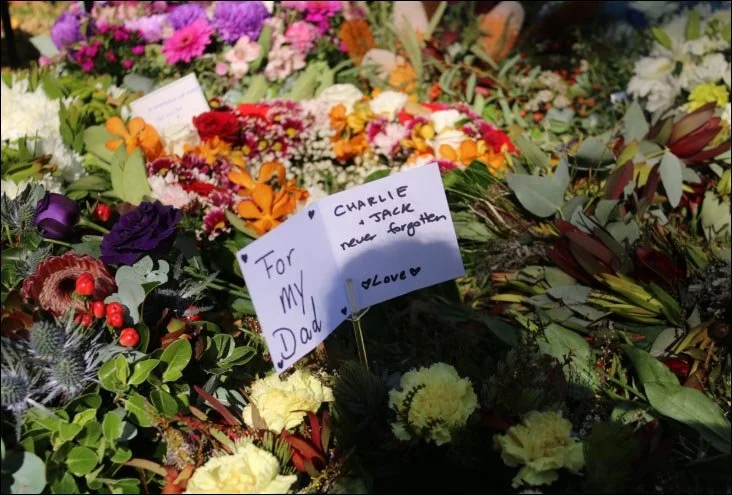
The event’s final speaker, Lana Cormie, gave a deeply moving address about her family’s experience of workplace tragedy and her ongoing advocacy for stronger safety laws. She shared the loss of her husband Charlie, who died in a trench collapse at work in 2018, an incident that also killed his young colleague Jack Brownlee.
Following this devastation, she became a leading campaigner for workplace manslaughter laws and now serves on the Workplace Incidents Consultative Committee, advocating for stronger protections for both injured workers and the families of those killed at work.
Lana spoke about the continuing grief and injustice faced by families affected by preventable workplace deaths, noting that hundreds of Victorian workers have died in similar circumstances since her husband’s death. She called for systemic reform of workplace safety laws and enforcement.
She stated: “Our OHS Act was written in the blood of dead and injured workers, through the advocacy of their families and their Unions. The Objects of the Act require that the safety of workers be secured by their employers who must provide the highest level of protection. To achieve this, we must use the Act to its fullest effect.”
She called for stronger government action to end the culture of treating worker deaths as a “cost of doing business” and for full enforcement of occupational health and safety laws, urging the regulator to “act like a police force, not a consultant”.
The message from Trades Hall was stark: “Remember the dead, fight like hell for the living.
“No one should ever go to work and not come home. No one.
“And as unionists, it is our shared responsibility to stand up – for ourselves, for each other, and for those who can no longer speak for themselves.
“To fight for strong worker representation to ensure workers have a genuine voice in their workplaces, including around health and safety.”
Safety Net Journal, Victorian Trades Hall Council