
An IEU survey of Tasmanian Catholic school members has found workload far outstripping pay as their main concern.
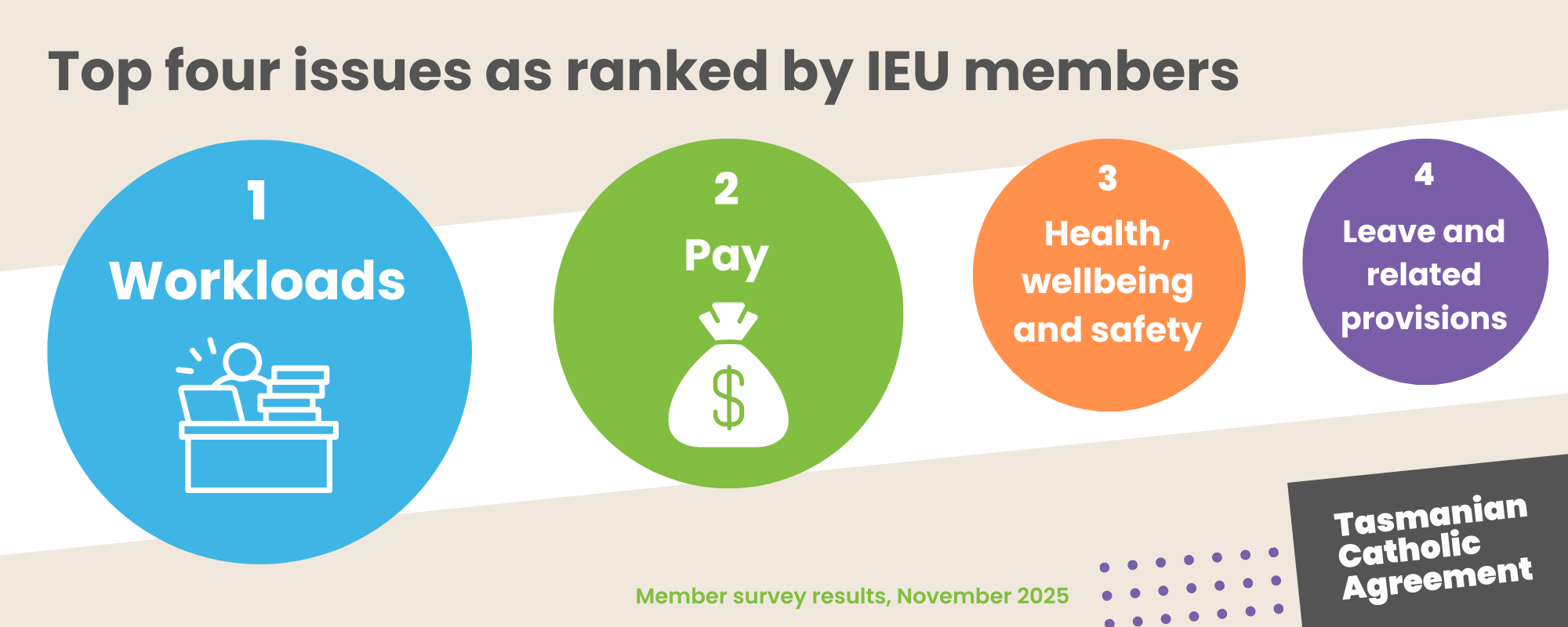
A startling 49% of members rated workloads as their number one priority. Pay was a distant second with 29%, followed by health, wellbeing and safety. That’s the same terrible trio as around the country, but the dominance of workloads makes this a key issue in upcoming bargaining in the sector. In particular, endless administrative task creep simply must be curtailed.
Another survey result showed why workload must be taken seriously: Only 49% of respondents said they plan to stay in their current role for more than five years, and over 15% are actively looking for other roles.
Over 95% of members surveyed work at least 3 additional hours in an average week and a whopping 34% undertaking more than 10 hours of additional work.
Seven workload areas were assessed with administration including compliance and data collection considered “a very significant burden” by 62% of respondents, well ahead of work associated with Individual Learning Plans (44%).
These worrying figures put Catholic employers on notice: If something isn’t done fast, the flow of experienced, skilled staff out of their schools will continue.
Members highlighted these workload-related issues:
Unsustainable job creep and rising student needs/behaviour, leading to burnout.
Pay that does not reflect the complexity and demands of their roles.
Insufficient structural support and respect from employers, including poor workload management, unsafe or delayed complaint processes, and limited input in decision-making.
The survey revealed that the membership is highly experienced – 74% having worked in education for more than 10 years and over 88% aged over 35. These workers know their sector and they feel let down by their employer.
Bargaining will provide a crucial space for staff insights and expertise to guide improvements.
What members want
Across all the written responses, clear themes emerged about what needs to change:
No increase to days worked and no compulsory job transfers – these concerns relate to employer claims last time around and clearly have not abated.
Reduced workload and protected release time, especially for secondary teachers and those with large numbers of students on Individual Learning Plans.
Clear caps on class sizes and transparent allocation of support staff based on student needs and funding.
Meaningful limits on meetings, with adherence to agreed time allowances, and recognition that many meetings “could have been an email”.
Protection of planning time, including compensating for missed release and properly accounting for extra duties such as camps, PLCs, and supervision.
Members also called for:
Pay parity with other states and pay that actually keeps up with the cost of living.
Improved parental leave, including gender-neutral language and better support for partners, surrogacy and diverse families.
Better recognition and classification structures for ES staff, LSOs, library and business services staff.
Holiday pay for TAs/LSOs and funded training and professional learning tailored to their roles.
Stronger protections in complaints processes, ensuring staff can raise concerns safely and with confidence, supported by fair procedures and genuine care.
A shift in culture so teachers and ES staff are trusted as professionals, backed by leadership, and able to focus on teaching and supporting students rather than endless paperwork.
As one member summed it up:
“Teachers get into this work because they care. Any new initiative should streamline extraneous work and buy us time, because we will use that time to improve how we educate the kids – or see our families and return refreshed, ready to give our all. Leadership needs to clear the road and let us teach.”
Campaigning and willingness to act
Members strongly back a collective, campaigning approach to the upcoming Agreement:
71% agree that achieving the best EBA outcomes requires the collective effort of the entire union, not just the negotiators.
67% believe the IEU should push hard and call on members to campaign strongly to win the best possible EBA outcomes.
Members are also willing to act to secure a fair outcome, with two-thirds ready to take various actions to support their claims.
Many members stressed that sustained, strategic industrial action – particularly around out-of-hours work – may be required to force change.
Health, wellbeing and injury
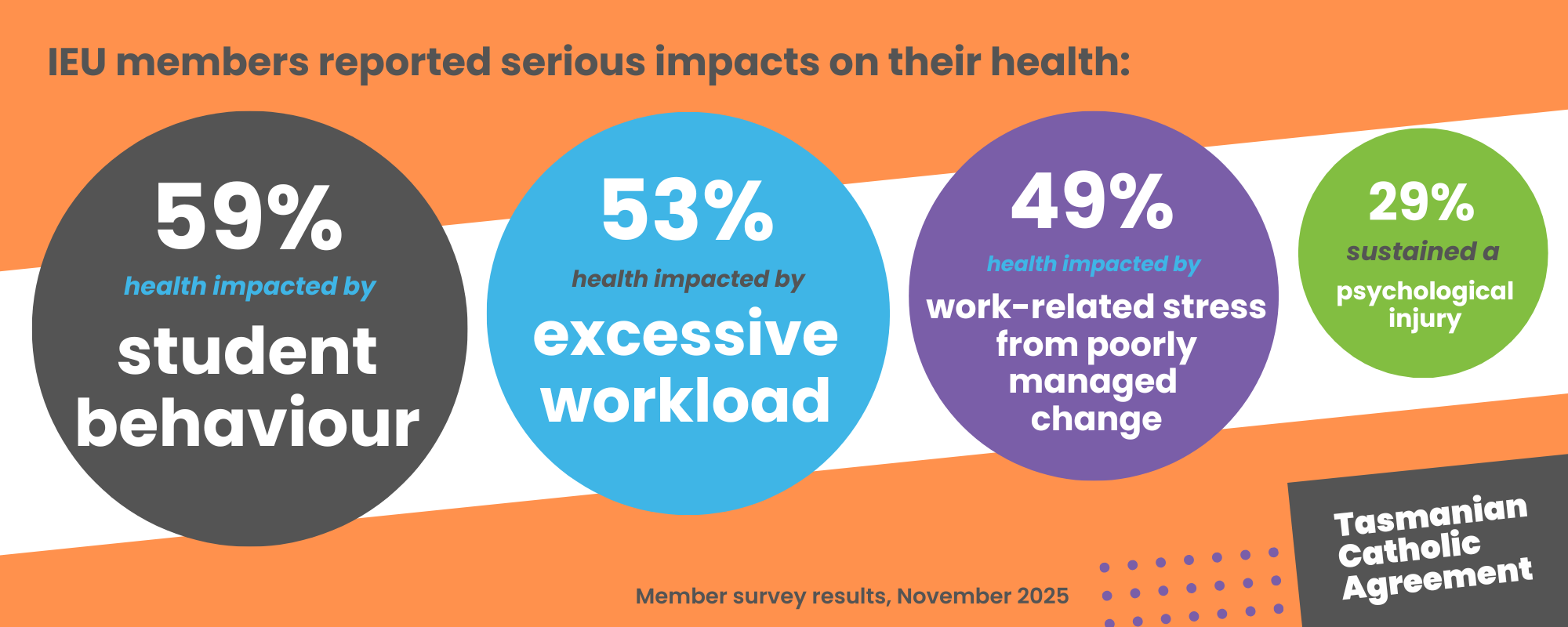
In the past 12 months, members reported serious impacts on their health:
53%: health impacted by excessive workload.
59%: health impacted by student behaviour.
49%: health impacted by work-related stress from poorly managed change.
A worrying 29% reported sustaining a psychological injury (such as persistent anxiety and stress, depression or PTSD) as a result of their work. These statistics are unacceptable and of great concern to the IEU.
Of those who didn’t take personal leave or make a workers’ compensation claim, 49% said they were worried about the consequences of taking leave on their job or reputation.
Members also raised specific issues such as:
Lack of protection from aggressive or vexatious parents and students.
Fear of being stood down over minor disciplinary practices.
Anxiety about taking sick leave because of the workload impact.
Across the country, educators report rising occupational violence and workload stress, with significant effects on their lives. Members want us to work with CET to identify improvements and ensure they meet their obligation to provide safe and healthy workplaces.
Pay and employer support
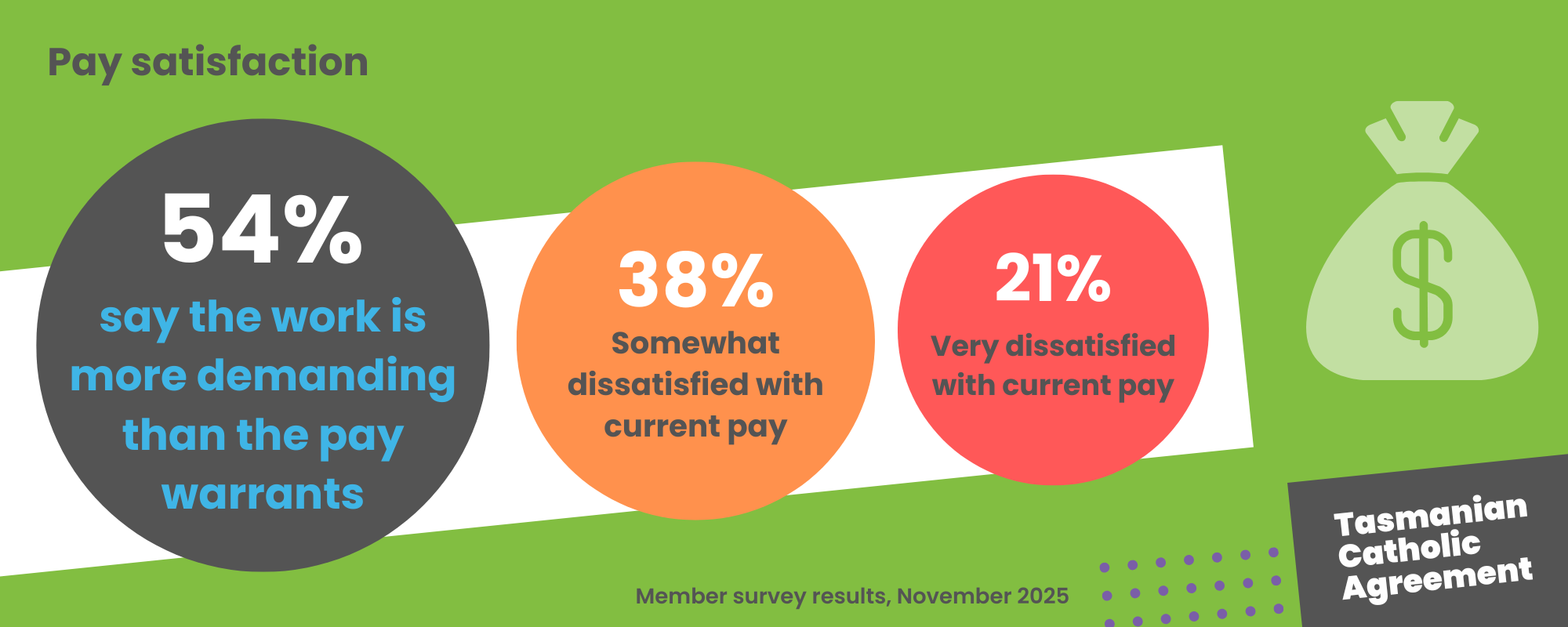
Pay satisfaction
Very dissatisfied with current pay: 21%
Somewhat dissatisfied: 38%
54% say the work is more demanding than the pay warrants.
Employer support
68% say their employer does not take proactive steps to help them manage workload.
67% say their employer does not offer flexibility (for example around when and where work is performed).
The survey provides a crucial guide for bargaining, ensuring members’ needs shape negotiations. The union will continue thorough consultation to make the strongest case for sustainable careers, which benefit employees, schools, and students.
