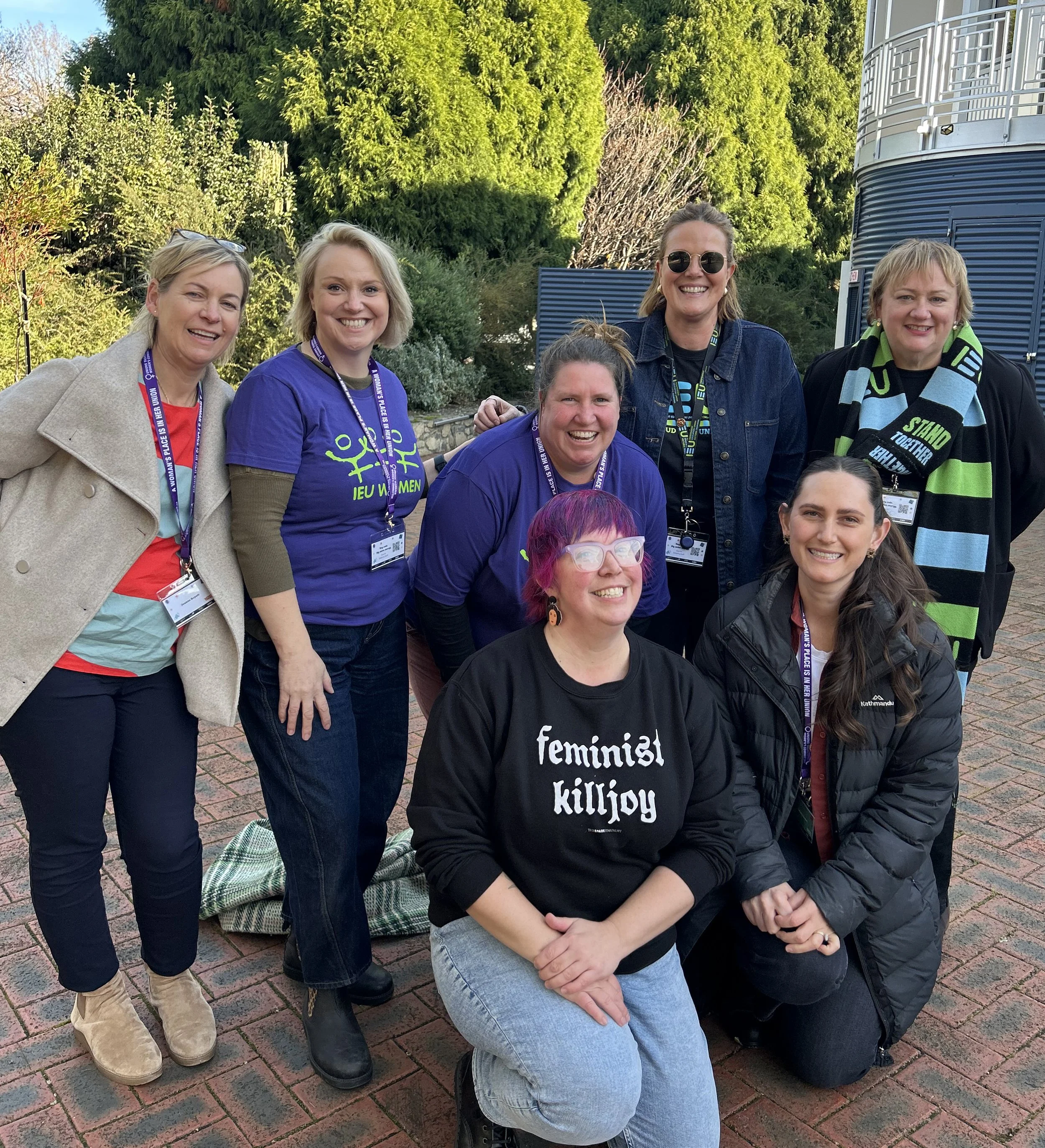
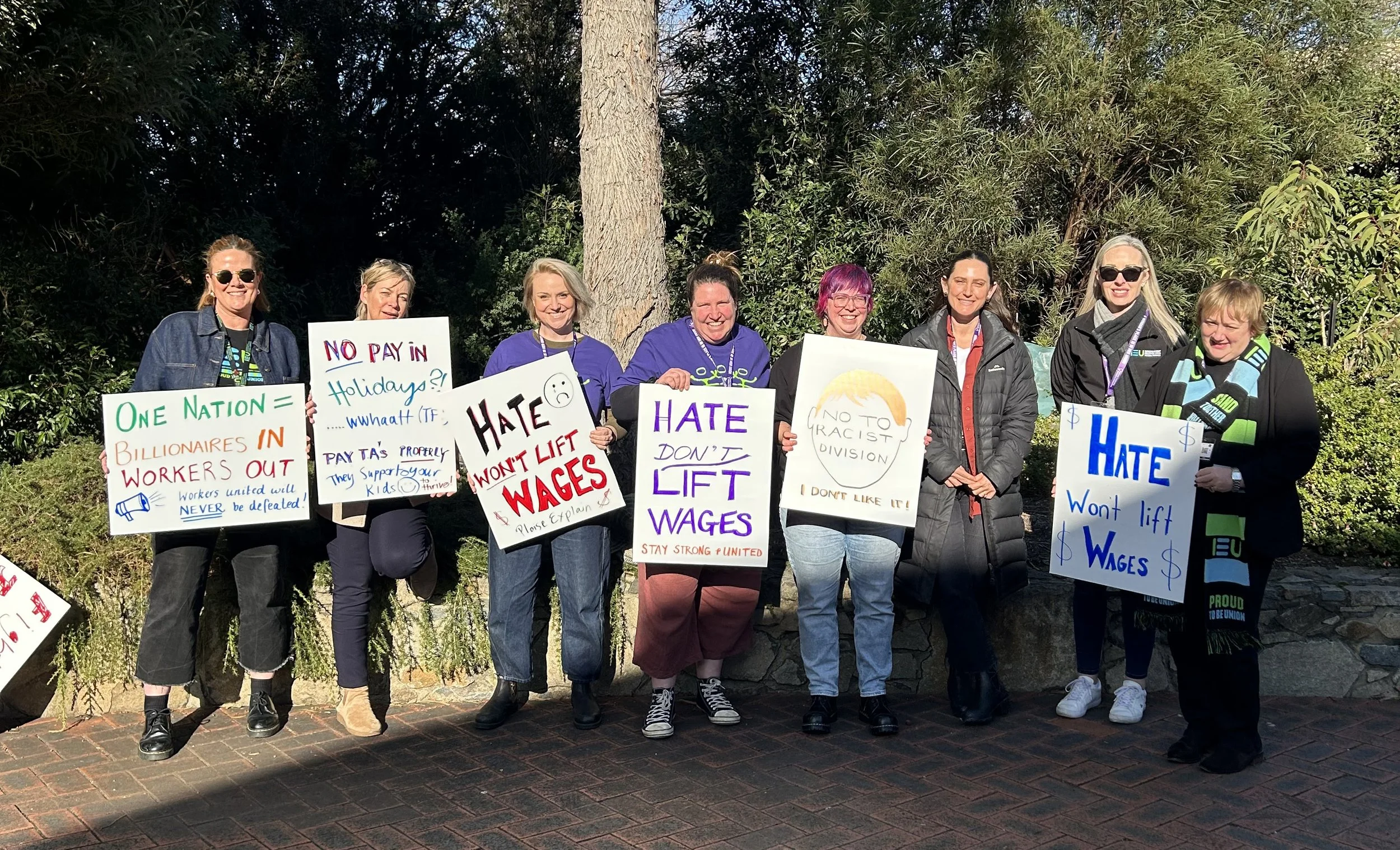
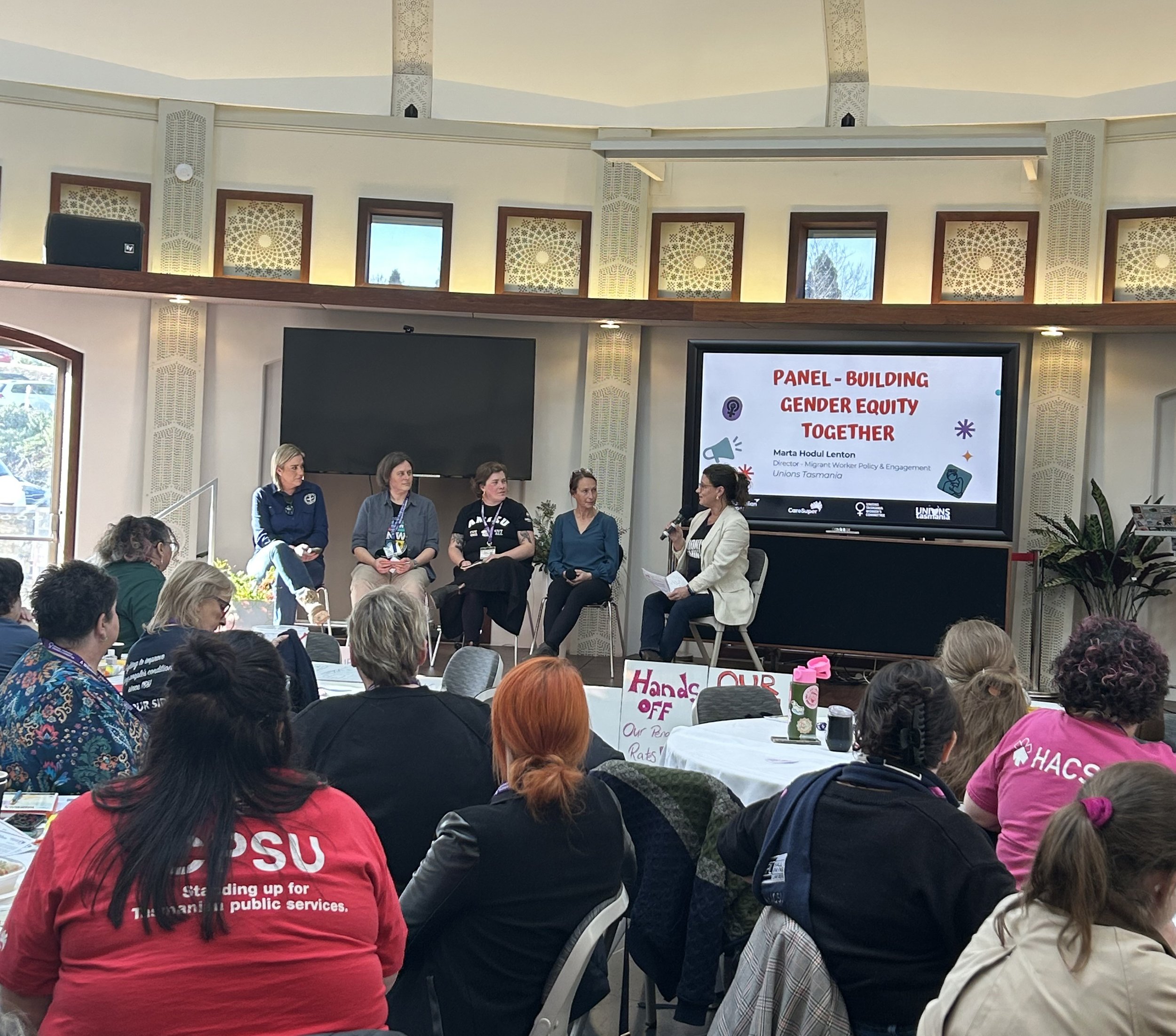
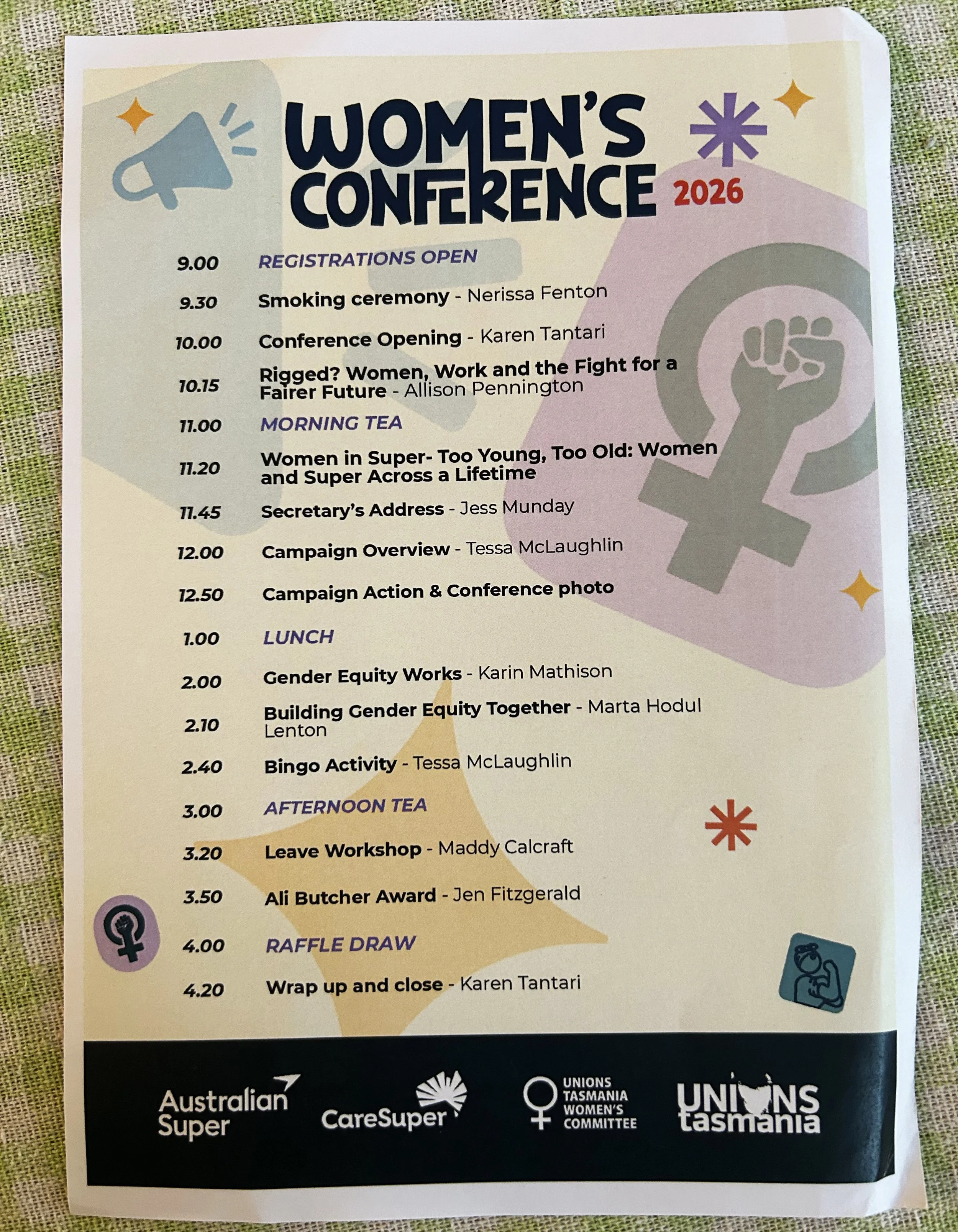
Every year, the IEU joins unions from across Tasmania in supporting a week dedicated to developing the next generation of women workplace leaders and activists.
The week begins with the renowned Anna Stewart Memorial Project training program and culminates in the Tasmanian Women's Conference.
IEU member Sydney Lonaker, a primary teacher at St Mary's College, said taking part in this year's Anna Stewart Memorial Project left her feeling "more confident and informed". The acclaimed leadership program equips union women with the skills and confidence to create fairer, safer workplaces.
IEU members at the conference included Gina Rose, Rep at Tarremah Steiner School; ES member Jeanne Boyett from Guilford Young College; and teacher Kari Thomas from Sacred Heart School.
The sessions were timely and relevant and contained thought-provoking material for all unionists, not just Tasmanians, so we have shared some of the highlights, as chosen by IEU attendees.

Sydney Lonaker was an enthusiastic participant in the Anna Stewart Memorial Project.
Rigged? Women, Work and the Fight for a Fairer Future (Chief Economist at the McKell Institute, Allison Pennington)
Allison argued that Australia's cost-of-living crisis stems not only from global pressures but also from decades of privatisation and the growth of for-profit essential services. She said rising costs in areas such as housing, health, education and childcare have hit women hardest, as they are more likely to work in care sectors, shoulder unpaid caring responsibilities and rely on affordable public services. Rebuilding strong public services, she argued, is both an economic and gender equality priority.
Too Young, Too Old: Women and Super Across a Lifetime (Colleen Harbord and panel)
Colleen and the panellists discussed the fact that women continue to retire with significantly less superannuation than men, reflecting a lifetime of lower average earnings, greater reliance on part-time and casual work, and career breaks to undertake unpaid caring responsibilities. These structural inequalities leave many women facing greater financial insecurity in retirement despite their substantial contributions to their families, workplaces and communities.
The panel concluded that improving financial literacy about superannuation from an early age, and advocating for policies to reduce the gender super gap, are essential to helping women make informed financial decisions and achieve greater economic security in retirement.
Secretary's Address (Jess Munday)
Jess spoke about Tasmanian unions' campaign against the Government's proposed changes to the state's workers' compensation scheme, arguing they would make it harder for injured workers, particularly those with psychological injuries, to access compensation and support. Tasmanian unions say the proposals would shift the burden onto injured workers instead of addressing the causes of workplace injury and are calling on the Government to protect workers' rights and invest in safer, healthier workplaces instead.
Campaigning Overview (Tessa McLaughlin)
This interactive session explored the future of campaigning and the union movement's role in defending and advancing workers' rights. Tessa emphasised that lasting change depends on organised workers with the confidence and courage to act collectively. She reminded participants that women's rights were won through decades of activism and must continue to be defended and extended through collective action.
Participants then took part in practical exercises to strengthen their campaigning skills, developing messages and strategies to respond when workers' or women's rights come under attack. The session reinforced the importance of speaking up, organising together and taking action.
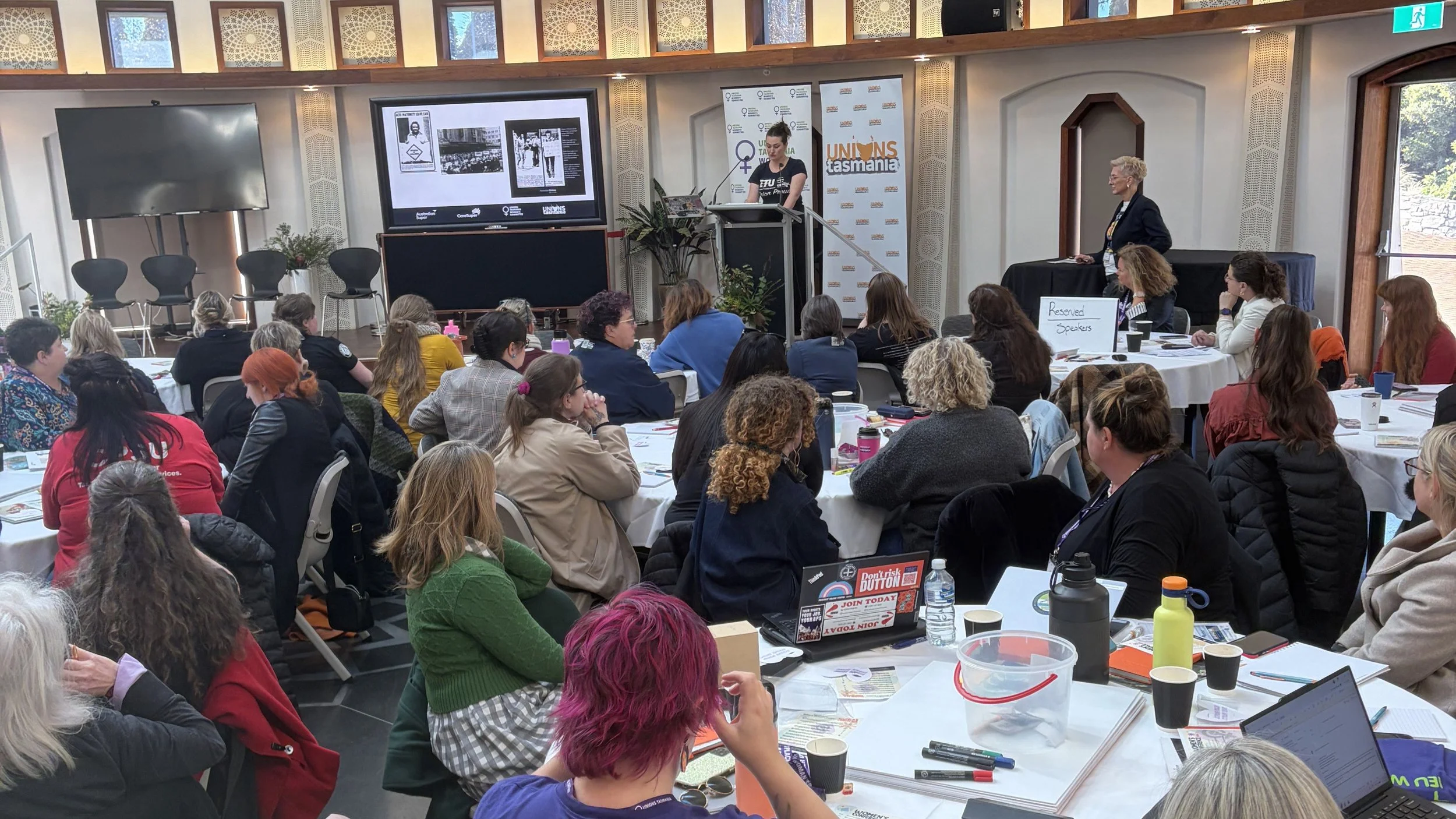
Gender Equity Works (Karin Mathison)
Karin shared findings from the Gender Equity Works report, which explores the experiences of women working in Tasmania's transport, utilities and construction industries. The research found that the biggest barriers are often not the work itself, but workplace culture. Women described dealing with ill-fitting PPE, inadequate facilities, inflexible rosters, limited career pathways, exclusion from informal networks, and ongoing harassment or discrimination.
The report also found that when workplaces provide supportive leaders, flexible work, mentoring, well-designed equipment and genuine inclusion, women thrive and stay.
The central message was that gender equity is not simply about recruiting more women; it is about redesigning workplaces so women are safe, respected and able to build long-term careers. Such changes not only improve gender equality but also help address skills shortages and build stronger, more productive workplaces for everyone.
The panel, hosted by Marta Hodul Lenton, featured women working in male-dominated industries discussing the challenges they face and the changes they are driving to make their workplaces more inclusive. One speaker said her priority was not simply attracting more women into these industries, but ensuring those already there receive the support they need to build long-term careers and remain in the sector.
Leave Workshop (Maddy Calcraft)
Maddy led another interactive workshop in which conference attendees worked together to build arguments for leave provisions that better support women and gender-diverse workers. Participants developed 10 key speaking points covering a range of entitlements, including reproductive health leave, family and domestic violence leave, gender affirmation leave, breastfeeding support, and improved parental leave.