
Trades Hall sets standards for injured worker code
On 18 February, unionists and injured workers gathered on the steps of Victorian Parliament to press MPs for a meaningful Code of Claimant Rights. Representatives from the Injured Worker Support Network (IWSN), including IEU members, met with MPs — among them WorkSafe Minister Ben Carroll — to share first-hand experiences of navigating Victoria’s workers’ compensation system and to call for enforceable protections.
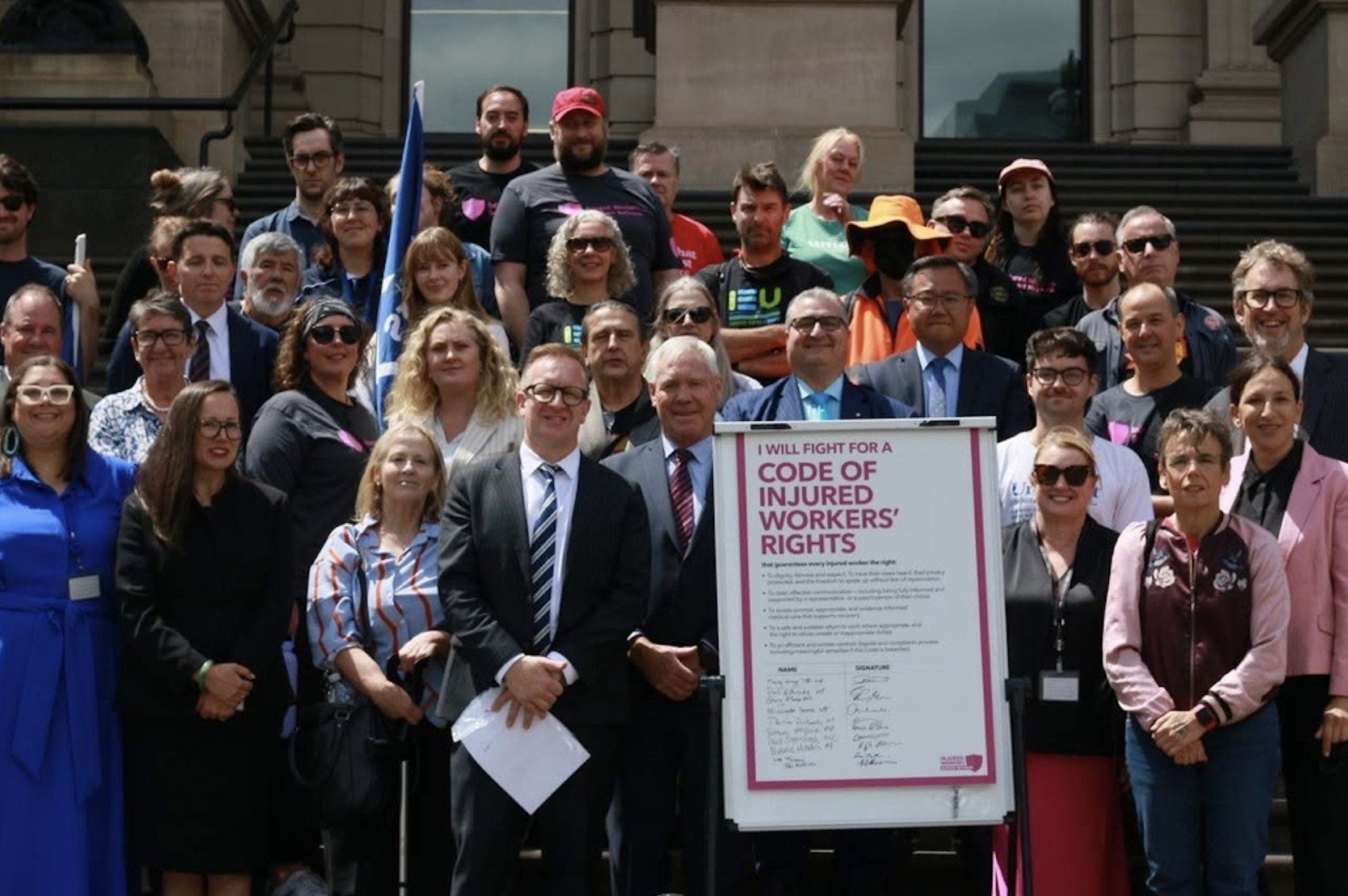
Many MPs signed a pledge supporting stronger standards.
The Victorian Government committed in 2025 to introducing a Code of Claimant Rights following a review of the workers’ compensation scheme.
The Victorian Trades Hall Council has made clear that any meaningful Code of Injured Workers’ Rights must set enforceable standards to ensure injured workers are treated with dignity and fairness, supported in their recovery, and not re-traumatised by the WorkCover system itself.
To guide the Code, the Injured Worker Support Network developed five core principles. It said injured workers should have the right to:
dignity, fairness and respect, including having their views heard, their privacy protected, and the freedom to speak up without fear of reprisal
clear and effective communication, including being fully informed and supported by a representative or support person of their choice
prompt, appropriate and evidence-informed medical care that supports recovery
a safe and suitable return to work where appropriate, including the right to refuse unsafe or unsuitable duties
an efficient, worker-centred dispute and complaints process, including meaningful remedies if the Code is breached.
What the new law does
The Code of Claimant Rights was established when the Victorian Parliament passed the Workplace Injury Rehabilitation and Compensation Amendment Act 2025.
Key changes include a new obligation for employers to ensure return-to-work coordinators complete approved training and are provided with the assistance and resources required to fulfil their role. This requirement will commence no later than 1 July 2027.
The legislation also introduces an independent review of the scheme at least every five years (beginning in 2030) and provides for the appointment of people with lived experience of serious workplace incidents to WorkSafe advisory committees.
The services cap for therapy and related supports for eligible family members has been raised to $10,000, and the range of services covered has been broadened. The new cap applies where a worker sustains an eligible injury or progressive disease, or dies as a result of a work-related injury, on or after the commencement date. In cases of work-related death, close family members will also receive a lump-sum grief and loss payment.
These measures represent progress — but they do not go far enough.
What the reforms don’t address
Trades Hall has welcomed the changes while warning that they do not undo the damage caused by the amendments made two years ago to Victoria’s workers’ compensation scheme.
Those changes significantly reduced support for workers experiencing work-related mental health conditions. Trades Hall’s SafetyNet described the overhaul as “devastating”, noting that workers injured through stress and burnout no longer qualify for weekly benefits unless they meet stricter impairment thresholds. Injured workers now only receive weekly WorkCover payments beyond two and a half years if they are assessed as having a whole person impairment greater than 20 per cent.
Union representatives argue that without addressing these restrictions — particularly for psychological injury — a Code of Rights risks becoming symbolic rather than transformative.
Supporting injured workers
Beyond legislative reform, the Injured Worker Support Network continues to provide direct support to injured workers navigating the system.
The IWSN holds regular meetings to build community and reduce isolation. Adjusting to an injury can be difficult, particularly when navigating the complexities of a WorkCover claim. These meetings offer a space for mutual understanding and practical support, where injured workers can connect with others facing similar challenges.
The network also provides information, resources, and advocacy campaigns aimed at improving the system for injured workers.
