
Victorian law restricts NDAs: national reform urged
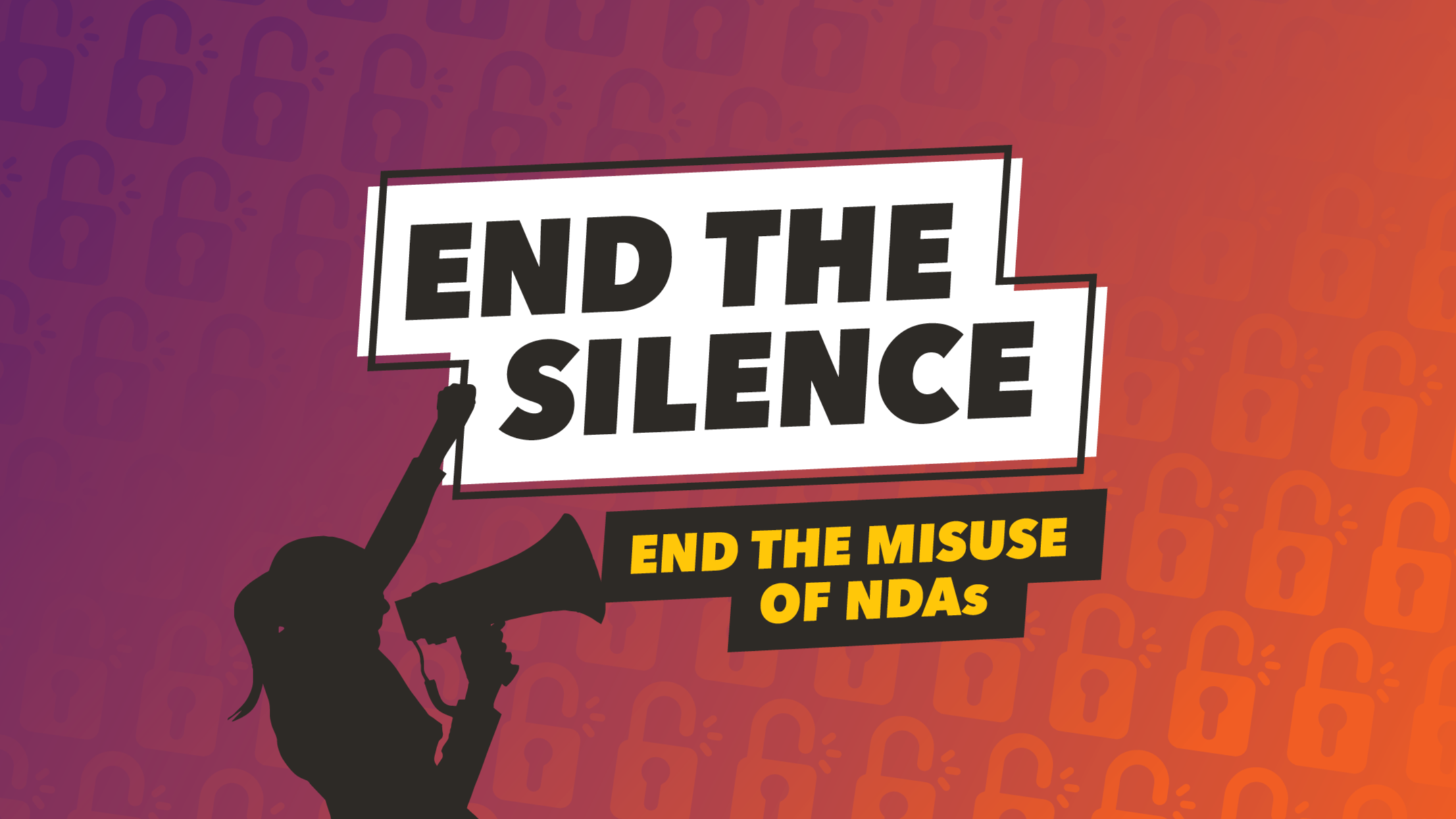
The (successful) Trades Hall campaign against NDAs.
From 1 July 2026, Victorian workers have new protections restricting the use of non-disclosure agreements (NDAs) in sexual harassment cases, following long-standing union campaigning to address workplace silence and cover-ups.
Under the Restricting Non-disclosure Agreements (Sexual Harassment at Work) Act 2025, NDAs that prevent workers from speaking about their experiences or identifying perpetrators will generally be unlawful unless they are genuinely requested by the complainant and meet strict safeguards.
These safeguards require that the worker is not pressured into signing, receives clear written information about their rights, is given a cooling-off period to consider the agreement and obtain legal advice, and formally confirms that all conditions have been met.
If these requirements are not satisfied, the NDA will not be enforceable. The legislation also allows limited permitted disclosures in certain circumstances to ensure survivors can still access support and speak about their experiences where appropriate.
The IEU has promoted and reported on the campaign to curb the misuse of NDAs for years and welcomes this important legislation.
Prior to the law’s enactment, the Victorian minister for economic growth and jobs, Danny Pearson, said NDAs "were meant to protect trade secrets", but had become "entrenched practice in settling sexual harassment complaints".
Concerns remain
Centre for Future Work senior researcher Dr Lisa Heap told Workplace Express that it remains to be seen if the law "goes far enough to change the entrenched culture in legal practice of requiring secrecy for a settlement".
She made a submission to the Victorian government’s inquiry into the topic prior to the drafting of the new law in which proposed creating a register of agreements with NDAs, "allowing an independent third party to review their content and to check for repeat offenders".
That would "ensure lawyers go beyond advising on the minimum requirements to comply with the law . . . (and) may encourage employers to focus less on secrecy and more on preventing sexual harassment", she says.
Dr Heap is concerned that some lawyers may "treat the new laws as a series of technical hoops to jump through" while still pursuing secrecy, which would reduce the effectiveness of the new law.
Call for national NDA law
The federal government has revised regulations to enable state and territory laws dealing with workplace sexual harassment-related non-disclosure agreements to operate alongside the Fair Work Act while it considers the Australian Human Rights Commission's 'Speaking from Experience' report.
An Albanese Government spokesperson told Workplace Express "The amendment will help to provide certainty for victim survivors and employers pending this consideration".
The 'Speaking from Experience' report recommends amending the federal Sex Discrimination Act and industrial laws "to restrict the use of confidentiality and non-disclosure agreements in workplace sexual harassment cases", following the lead of a 2021 Irish Bill.
In June, Sex Discrimination Commissioner Anna Cody and Working Women's Centre (WWC) chief Abbey Kendall told the International Association on Workplace Bullying and Harassment's biennial conference that Australia needs national laws to stop non-disclosure deals silencing victim-survivors of workplace harassment and discrimination
The WWC is urging the Albanese Government to go further than Victorian new laws. Their campaign, Our Silence Is Not For Sale, makes 14 recommendations for new national legislation based on experience of its activist network, comprised of women “who have experienced sexual harassment and discrimination and were either unfairly pressured or coerced to sign non‑disclosure agreements”.
The WWC says national law reform is urgently required to ensure women across the country can speak up.
The Victorian government defines sexual harassment as follows:
What is workplace sexual harassment?
There are laws that protect workers from sexual harassment in the workplace. Everyone has the right to a workplace that is safe and free from sexual harassment.
Sexual harassment under the Restricting Non-disclosure Agreements (Sexual Harassment at Work) Act 2025 has the same meaning as in the Equal Opportunity Act 2010. The Equal Opportunity Act 2010 (Vic) defines sexual harassment as unwelcome sexual behaviour that causes a person to feel offended, humiliated or intimidated, where a reasonable person could have anticipated that reaction in the circumstances.
Sexual harassment includes:
an unwelcome sexual advance
an unwelcome request for sexual favours
any other unwelcome conduct of a sexual nature.
Sexual harassment can be physical, verbal or written. Examples include:
comments about someone’s private life or the way they look
sexually suggestive behaviour, such as leering or staring
brushing up against someone, touching, fondling or hugging
sexually suggestive comments or jokes
displaying offensive images or objects
repeated requests to go out
requests for sex
sexually explicit emails, text messages or posts on social media
sexual assault
suggestive behaviour.
If this content raises issues for you, support is available.
1800RESPECT (24/7) – 1800 737 732 or https://www.1800respect.org.au
National counselling, information and support for people experiencing sexual harassment, sexual assault, or domestic and family violence.Lifeline (24/7) – 13 11 14 or https://www.lifeline.org.au
Crisis support and suicide prevention services.Beyond Blue – 1300 22 4636 or https://www.beyondblue.org.au
Support for anxiety, depression, and emotional distress.Fair Work Ombudsman – https://www.fairwork.gov.au
Information on workplace rights, including sexual harassment protections.WorkSafe Victoria – https://www.worksafe.vic.gov.au
Guidance and reporting pathways for workplace psychological injury and harassment.
If you are in immediate danger, call 000.
LINKS:
Working Women’s Centre Australia Our Silence Is Not For Sale campaign