World backs the right to strike: now for Victorian Catholic schools

Local and international developments are reinforcing the importance of the IEU’s efforts to win fundamental industrial rights for members in Victorian Catholic education. From the floor of the Victorian ALP State Conference to the world’s highest court, the critical importance of the right to take industrial action has been recognised.
On 21 May 2026, the International Court of Justice (ICJ) ruled that the right to strike is protected under International Labour Organization (ILO) Convention No. 87 (Freedom of Association and Protection of the Right to Organise, 1948).
Just days later, the Victorian ALP State Conference called for reform to ensure that staff negotiating multi-employer Agreements have the right to take industrial action, as well as calling specifically on Victorian Catholic employers to consent to fair bargaining.
Global education union Education International described the ruling as an “historic victory for workers everywhere — and for education unions across the globe”, affirming what education unions have long argued: “freedom of association is meaningless without the power to act collectively, without the right to strike”.
Australia, shamefully, remains one of the jurisdictions where the structure of an employer determines whether workers have access to industrial action — and that is why the IEU is lobbying for legislative reform.
Under the Fair Work Act, IEU members covered by multiple employers — as in Victorian Catholic education — must obtain a single interest authorisation from the Fair Work Commission before they can access protected industrial action in multi-employer bargaining.
As IEU members in this sector know, this is far from a simple process. Members have gathered official signed statements of support from thousands of non-union colleagues and have had to contend with inadequate staffing data from employers, delaying assessment of their application until a hearing in mid-June.
If Catholic education were treated as one employer, as the Victorian government is in public education, these costly and time-consuming hurdles would not exist, and members would already have access to protected industrial action. This is no small matter. On 24 March, a protected AEU strike shifted a bargaining impasse with the Victorian government through a massive show of support.
Legislative reform needed
Earlier this year, an IEU delegation discussed legislative reform around multi-employer bargaining with Deputy Prime Minister Richard Marles. While initial changes were introduced through the Closing Loopholes reforms, the framework still makes it far too difficult for staff to secure the right to protected industrial action and good faith bargaining orders from the Fair Work Commission.
On Saturday 26 May, the Victorian ALP state conference unanimously passed a motion recommending that the national conference “remove unnecessary barriers that prevent workers from taking industrial action in multi-employer bargaining”.
“The right of workers to take industrial action is fundamental,” the motion stated.
“Current laws, however, excessively restrict workers taking protected industrial action, particularly in multi-employer bargaining such as in the Catholic education sector, where workers face onerous procedural and approval processes in order to access fair bargaining rights.
“Victorian Labor further calls on all 35 Catholic education employers to consent to bargaining for an agreement under which fundamental industrial rights are available to workers, including the right to strike.”
“The right of workers to withdraw labour is significantly restricted through complex legal requirements, lengthy procedural barriers and the threat of substantial penalties.
“These disproportionately impact workers in feminised and publicly scrutinised industries, including the education sector, where workers are often discouraged from taking action despite increasing workloads and declining conditions. These barriers are even greater and more complex in multi-employer bargaining.
“Such barriers are a major historical issue for Catholic education staff. Better pay and conditions are often delayed by protracted agreement negotiations, in which staff have not had a legal right to take industrial action.
“Strong industrial rights are essential to fair wages and safe workplaces in the Catholic sector. Without them, bargaining power remains heavily weighted toward employers.”
The International Court of Justice ruling
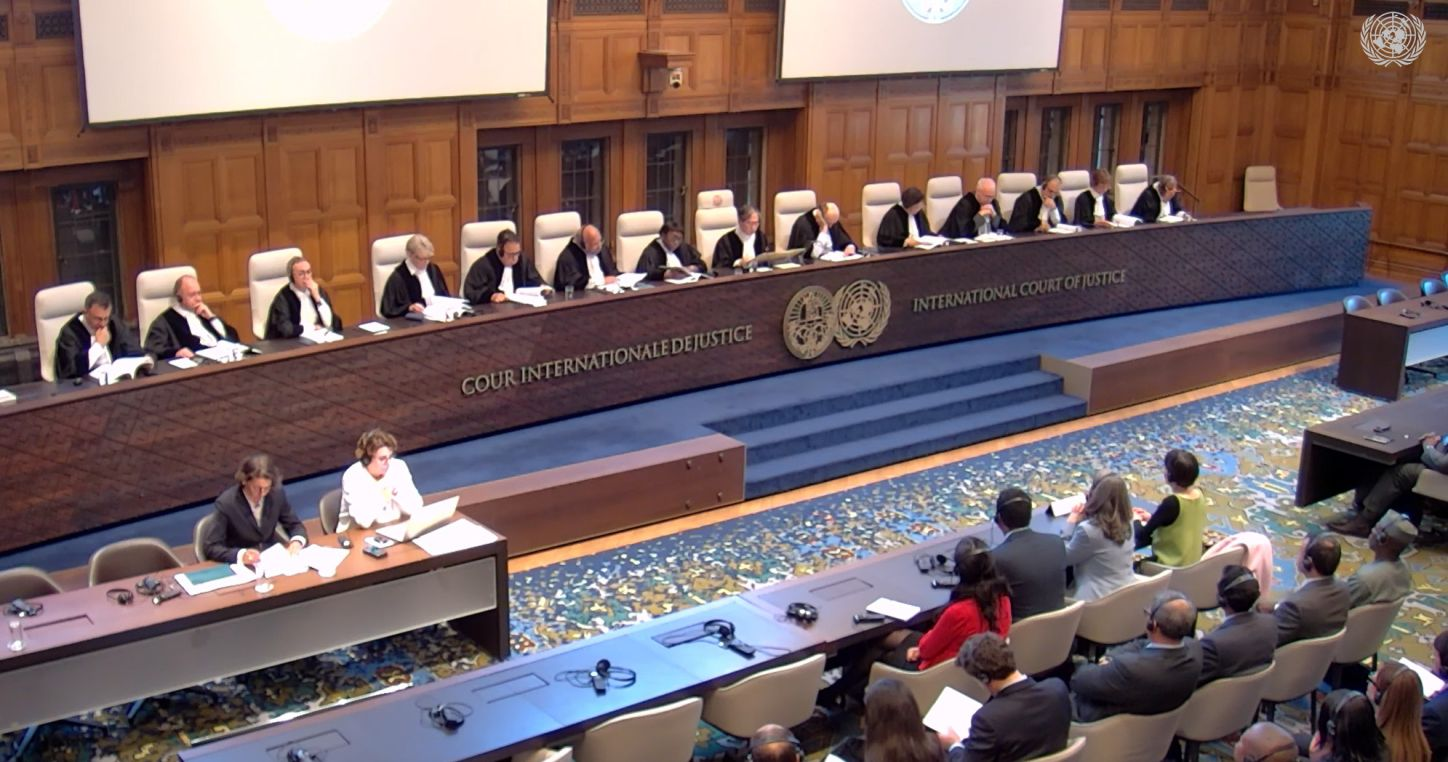
The ICJ, the principal judicial organ of the United Nations, has two functions: resolving legal disputes between States under international law, and issuing advisory opinions on legal questions referred by authorised UN bodies and agencies. The ILO asked the Court to rule on the right to strike in 2023.
By a 10–4 majority, the ICJ confirmed that the protection of workers’ and unions’ freedom of association under Convention No. 87 includes the right to strike, even though the Convention does not explicitly mention strikes.
The ruling resolved a long-running dispute within the ILO over whether strike action is covered by the Convention.
The ICJ described the right to strike as an essential component of the ability of workers’ organisations to function effectively under freedom of association.
EI backs the right to strike ruling
Education International said, “From classrooms to national capitals to the ILO itself, education unions have consistently demonstrated that the ability to take collective action is essential to protecting quality public education, good working conditions, and the dignity of the profession”.
“This ruling validates not only legal arguments — but the daily struggles of educators who organise, mobilise, and, when necessary, strike to defend their students, their professions, and their communities.
“At a time when educators face:
chronic underfunding
increasing privatisation
stressful working conditions
growing attacks on trade union rights
this decision strengthens our collective capacity and resolve to push back and to build equitable, inclusive, and well-funded public education systems.
“For Education International and its members, the right to strike is not just a principle — it is a tool to defend public education and social justice worldwide.”
EI called on all ILO member states to:
fully respect and implement the ruling
remove unjustified restrictions on the right to strike
engage in genuine, good-faith social dialogue with education unions.
Australia is one of those ILO member states. In fact, it was a founding member in 1919. It is time Australia heeded EI’s call and joined the many nations that respect the right to strike for all workers. And it’s well past time that Victorian Catholic employers recognised that their position is out of step with Australian industrial standards, with international law, with community expectations and with Catholic social teachings.