Constantly learning: IEU members on the first year of teaching
We asked a graduate teacher and his IEU Rep to reflect on the challenges and rewards for new teachers, and what this year’s cohort of educators can expect.
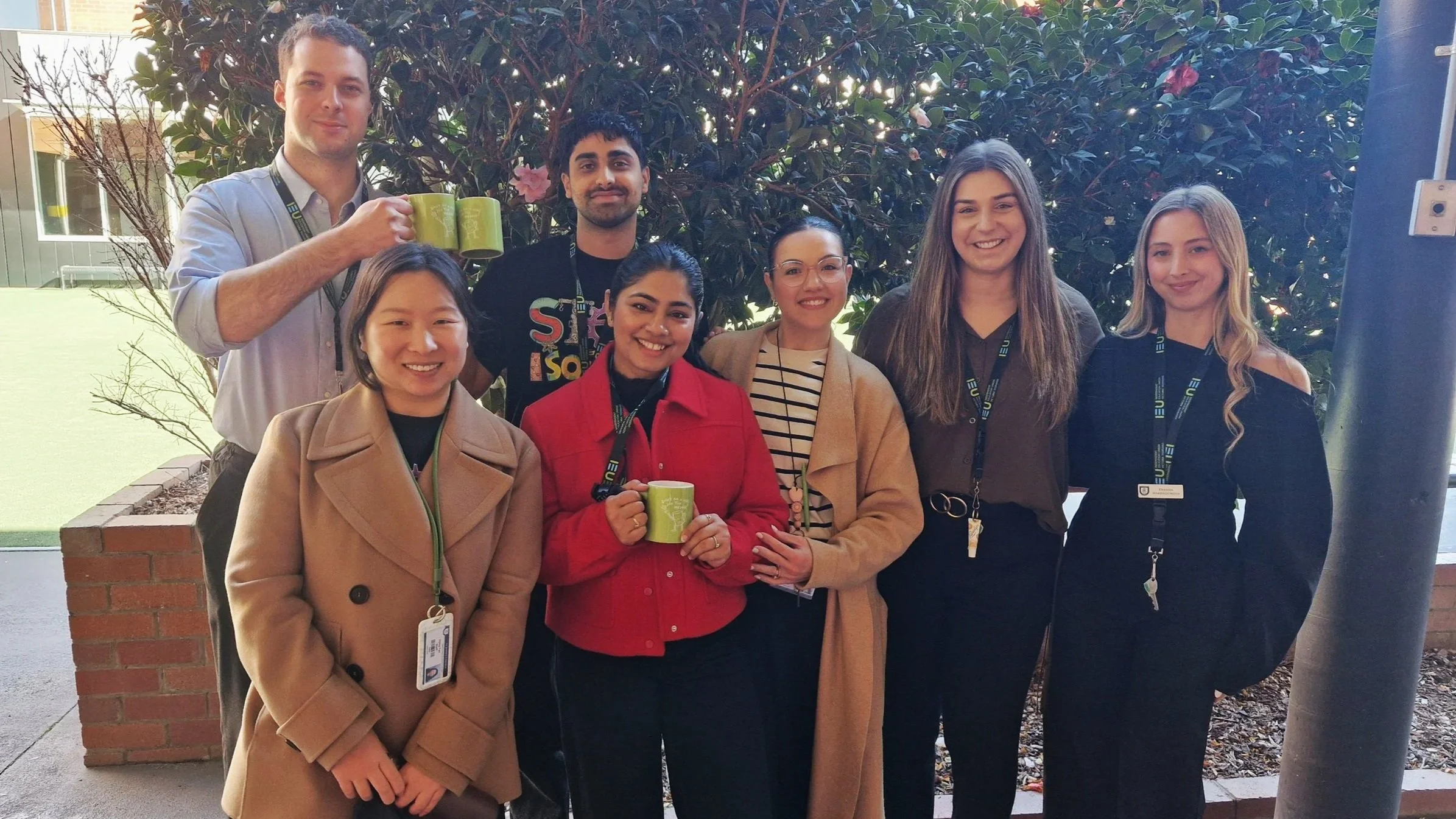
Danyal, third from left, and Maddison, second from right.
In 2025, graduate Danyal Punjwani completed his first year of teaching at St John’s College in Preston, Melbourne, where he taught Year 10 Pastoral Care and Science, as well as VCE Biology. He was supported along the way by IEU Rep Maddison Attard, a Middle School and VCE teacher.
The graduate: Danyal
What was the best aspect of your first year in education?
Every day is dynamic and interpersonal, and I am always building relationships and constantly learning. I get the opportunity to learn new things across different departments. The level of autonomy as a teacher is incredible as I have so much control on how to teach my subjects.
What advice would you give to someone entering their first year in education?
Prepare as much as you can beforehand; the more resources and materials you have ready before you start, the more prepared you will be day to day. Completing your Victorian Institute of Teaching requirements in your first year is also ideal.
What lessons have you learned from your first year?
Some days can be really tough, where students have their own at-home problems or issues they are facing, which may make it challenging in your class. It is sometimes evident that it is not an issue with me as a teacher but problems they are facing independently.
What made you become an IEU member?
Having an organisation which fights for my rights and my wage is great, as well as constantly being updated on things like bargaining and latest news on EBAs.
What do you say about the union to non-members?
They fight for you and do the heavy lifting to make sure you’re compensated properly.
The mentor: Maddison Attard, teacher and IEU Rep
What sort of questions do you get from new union members?
I’m often asked about workload, leave entitlements, and time fractions, particularly in relation to extras.
What is the most interesting aspect of working with newcomers?
It has been incredibly rewarding to advocate for and support newcomers, especially new educators. I’ve had the opportunity to ensure that early-career teachers receive a reduced face-to-face teaching load, allowing them time to prepare lessons, complete administrative tasks, and observe experienced colleagues.
What is the best thing schools can do to help new educators settle into their roles?
To protect the wellbeing and longevity of new teachers, schools must prioritise support and provide strategies for maintaining a healthy work–life balance. This helps them manage the significant workload of teaching and feel confident to ask for help when needed.
What is the biggest challenge for the union with new graduates?
The biggest challenge is navigating the VIT process, which can be particularly demanding for graduate teachers. While many schools reduce face-to-face teaching time to support graduates, the additional workload of the Victorian Institute of Teaching process can create pressure during a period that should focus on building confidence, proficiency, and resources.
What do you say about the union to non-members?
If you insure your health, your home, and even your pet, why wouldn’t you insure your job? In today’s educational climate, you never know when you might need protection, and it’s always better to have it before it’s too late.