Sarah Nieuwkerk: From the concert hall to the classroom
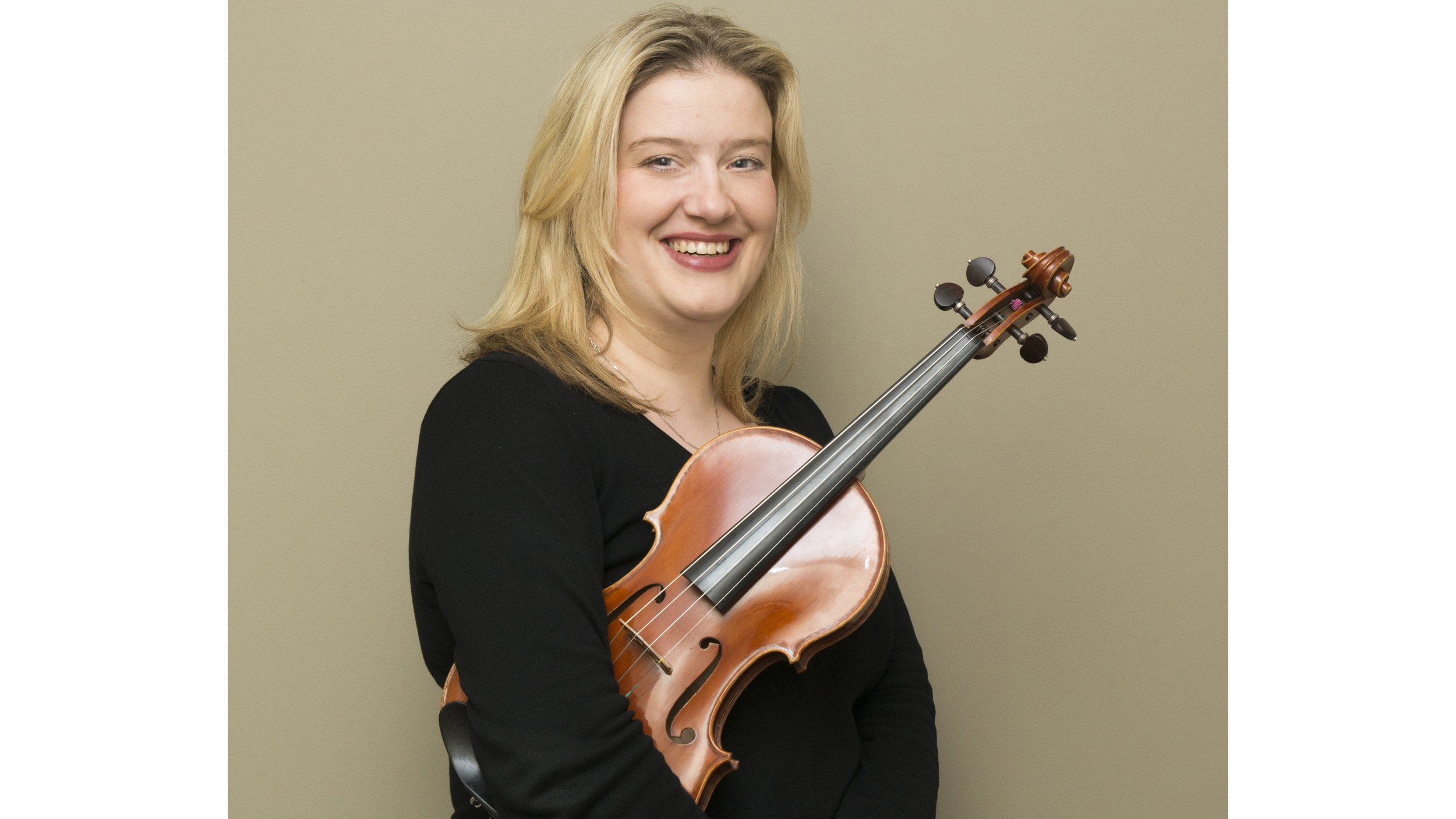
Sarah Nieuwkerk’s mother, a music teacher, warned her not to become a music teacher!
A piano teacher who had been director of music at several schools and run her own music school, Sarah’s mum said teaching was ‘a lot of hard work’ with ‘a lot of things that… you’ll have to fight for’.
However, in one of her first lectures at university, the dean of the music faculty said, ‘stop flipping burgers at McDonald’s, go and get yourself some students’.
He said by learning how to instruct other people, Sarah would learn a lot about her own practice.
‘And I took that on board and ended up working in schools before I turned 18, which was ridiculous. I started out at Overnewton College in Keilor at 17 and was conducting a string orchestra where some of the students were older than I was. That was a little bit confronting!
‘But it was eye-opening to give your passion to your students and be able to kind of sculpt the journey that they were on while you’re still sculpting your own journey.’
A Master of Performance Teaching and a Diploma of Education followed later. Her primary passion, however, has always been instrumental teaching, performance and leading large ensembles.
Sarah studied international relations in case music ‘didn’t work out.’
‘And it actually did work out. I was quite good at teaching and I love my students.’
Performance precarity
Sarah began playing violin at three, joining string quartets and piano trios at high school. At university, she continued to work as a freelance musician, working in musical theatre and with the Royal Melbourne Philharmonic Orchestra.
She describes performing at a high level as ‘a constant cycle of kind of professional development’ that feeds directly into her teaching.
Sarah is dismayed by the current dwindling of the performance sector. The Philharmonic, one of Melbourne’s oldest arts organisations, has to fight for funding and lacks a permanent rehearsal space.
Fighting for space
Similar pressures apply in schools, where music competes for curriculum time with literacy, numeracy, sport and STEM. In some schools, subjects such as dance, drama and music are rotated across terms rather than taught consistently.
‘Everybody should be doing music. It’s good for your brain. There’s so much research out there for what it does to your neural pathways and your ability to learn across many disciplines.
‘It is fundamentally good for your mental health and wellbeing.’
Sarah believes government leadership is needed to recognise music’s importance in education, ensure it is part of the national curriculum and accessible to all students.
‘There’s a lot of people who think that music is for the private schools, it’s for the elite. We need to dispel that myth.’
Recognising specialist skills
Sarah believes specialist instrumental teaching requires specialist expertise, particularly when teachers are working one-to-one or preparing students for high-level performance. That isn’t always reflected in working conditions.
Despite the frustrations, Sarah says the rewards remain profound.
‘The feeling after you complete a really good performance or you give the kids a really good experience is never going to leave you.’
She particularly values the long-term relationships developed through instrumental teaching, saying ‘it’s very satisfying to watch those seeds that you plant at the very beginning of people’s journey flourish and take off’.
For Sarah, the case for music ultimately extends beyond schools and the teaching profession.
‘I always tell my students, even if you don’t pursue music, ‘you are the next generation of concert goers’.
‘You are the next people who sit on community orchestra boards or committees and you are the ones who are going to actually make this industry either survive or die.’
The Point music education feature:
Feature: Music is more than an optional extra
Nick Cowall: Music belongs to everyone
Karman Melitsis: Making music part of school life
Dr Johanna Selleck: A life in music, a life of teaching
Kylie De Calmer: Why music belongs in every classroom