Nick Cowall: Music belongs to everyone
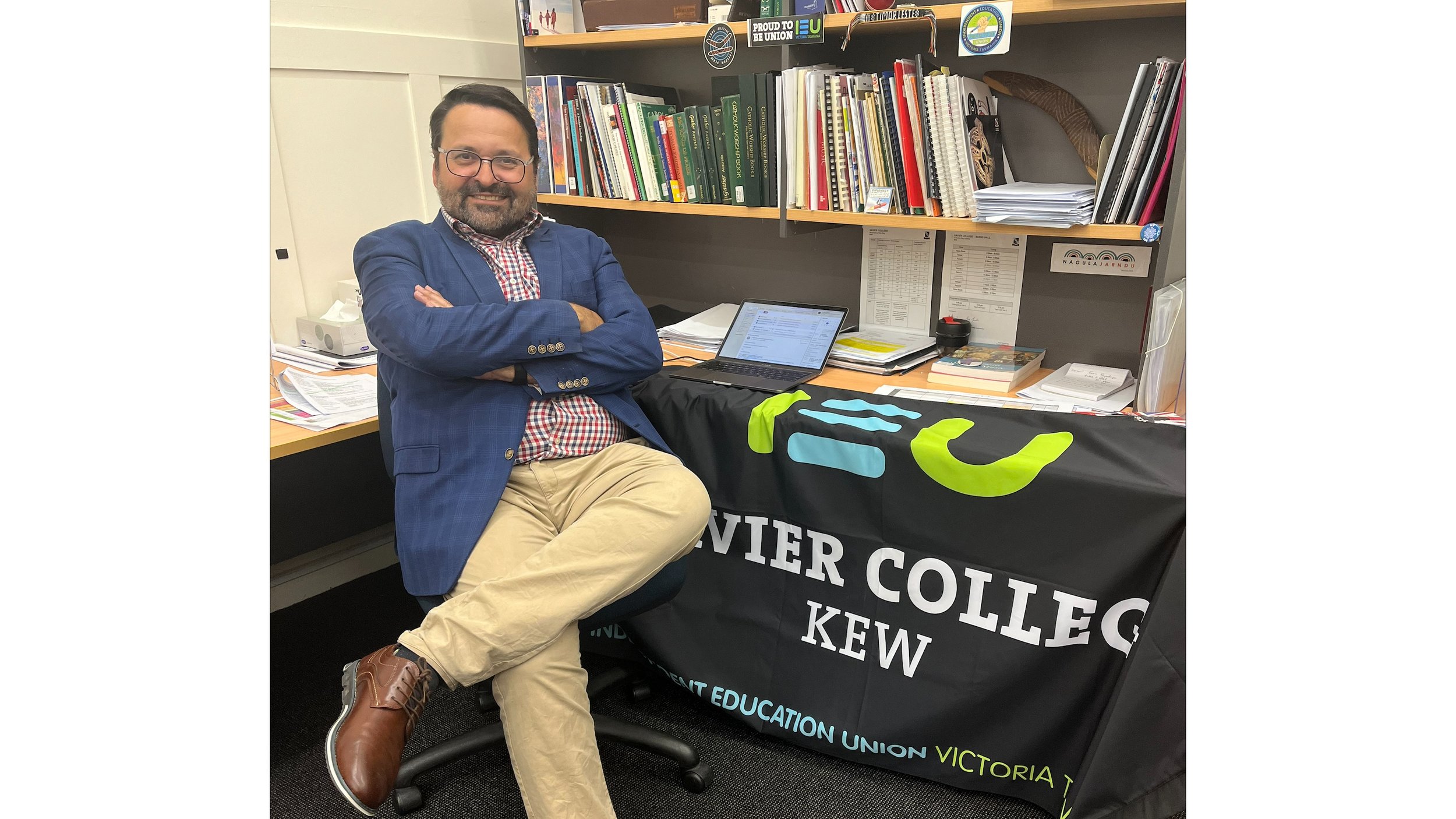
Nick Cowall, Head of Choral Music at Xavier College and an IEU Rep in two schools for over 14 years, jokes that he gravitated to unionism because of his ‘bolshie background’ – he has Russian heritage and studied at the Moscow Conservatory.
Nick’s belief in unions was confirmed at 19, when he was supported during a workplace dispute.
‘From that day I was a huge advocate of how a union can help the little guy,’ he says.
Nick retained that commitment to fairness throughout his career, no matter how far his musical talents took him.
From conductor to educator
When studying conducting, Nick gravitated to Richard Gill and Graham Abbott, ‘two big leaders in music education and music’.
‘They said the skills that you have in front of an ensemble as a conductor are not dissimilar to what a teacher has, and there aren’t enough good music teachers,’ he recalls.
Taking their advice, he first embraced teaching, then later completed postgraduate studies in performance and a master’s degree in orchestral and opera conducting.
Another conducting mentor, John Hopkins, further deepened his belief in making music accessible to everyone.
As winner of the 2026 John Hopkins and Rosemary Hopkins Award from the University of Melbourne, Nick will begin working with young conductors from Footscray’s Hyde Street Youth Band outside school hours.
I’ve been lucky that I’ve been with these musical giants who were just decent humans that believed in accessibility of music for everybody,’ he says.
The power of the (musical!) collective
Nick argues that the broader benefits of music, including attention, memory and language development, emerge when music is built into the curriculum ‘so the kids think of it as something that is normal’.
Every Xavier student from Year 3 to Year 8 has an hour of singing every two weeks.
At the House Singing Competition, 1000 boys sing in one day.
Only one other Victorian school (Melbourne High School) has a similar compulsory singing program.
‘And one of the things with the house singing, it’s the only event in the school where every single kid at that one time performs for the same goal, the same prize.’
He says there is no other activity that involves every student.
‘It’s 1000 kids at once, so it’s pretty powerful.
‘There is a profound sense of acceptance in a choir. It dissolves cliques, allowing sporty students, academic students, and everyone in between to stand together and perform as a single, harmonious voice.’
Nick even recruits popular or dominant personalities for choirs so others will follow!
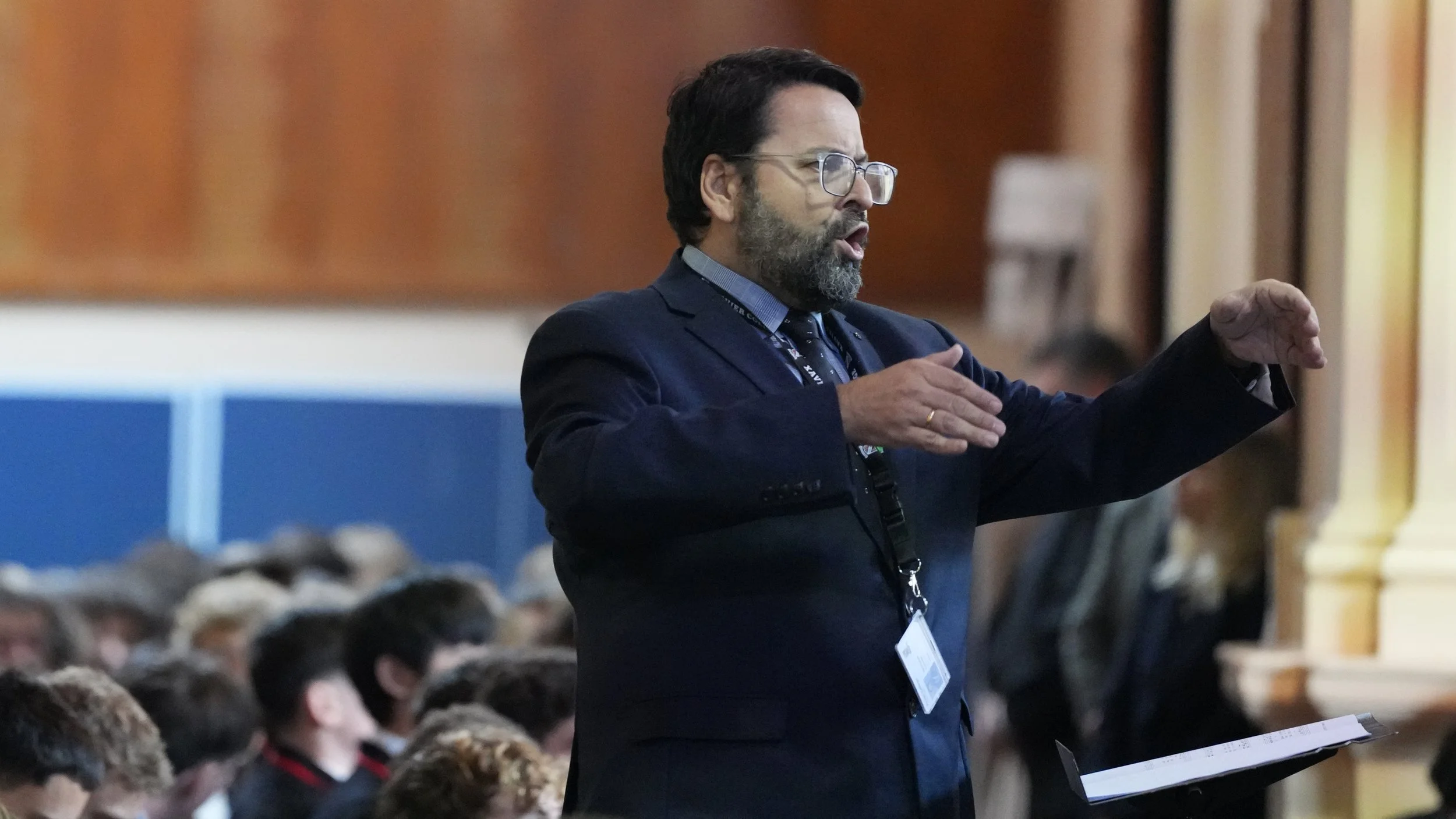
Nick oversees six choirs, a massed singing program for every student from Years 3 to 8, a strong K–12 liturgical singing culture and the school’s successful House Singing Competition.
Over Nick’s 11 years at Xavier, the senior choir has grown from 40 students to 120. The Year 5 and 6 choir has grown from 20 students to 70.
Making music part of school life
He says it is a strange cultural anomaly that Australia’s creative industries attract more patronage than sport yet struggle for the same recognition in education.
He senses that many people in educational and institutional leadership haven’t experienced what a quality music program can offer, so sport often takes precedence.
‘One hundred years ago to become a primary school teacher, you had to play the piano, you had to sight read, you had to be able to sing...’
Nick says music programs often thrive under supportive individual leaders, then wither when they depart.
‘Ultimately a quality high level music education needs to be instilled in our future educators.
He says we need to help develop realistic workload measures, advocate for appropriate staffing and ensure specialist teachers have the time and resources required to deliver quality programs.
Enterprise Agreements, he says, should clearly account for rehearsals, performances, camps, tours, evening commitments, preparation and instrument management.
‘The hidden co-curricular workload needs to be visible,’ he says.
For Nick, music education matters because it connects students with themselves, each other and their communities.
‘Music is good,’ he says. ‘It’s something that everyone needs to do. It’s about holistic education, it’s about community, it’s about so many of those things that make us human.’
The Point music education feature:
Feature: Music is more than an optional extra
Sarah Nieuwkerk: From the concert hall to the classroom
Karman Melitsis: Making music part of school life
Dr Johanna Selleck: A life in music, a life of teaching
Kylie De Calmer: Why music belongs in every classroom